
Forex Spread Explained: Bid, Ask, Variable Spreads and Trading Costs
PipSePaisa • Forex Education & Research
INTRODUCTION
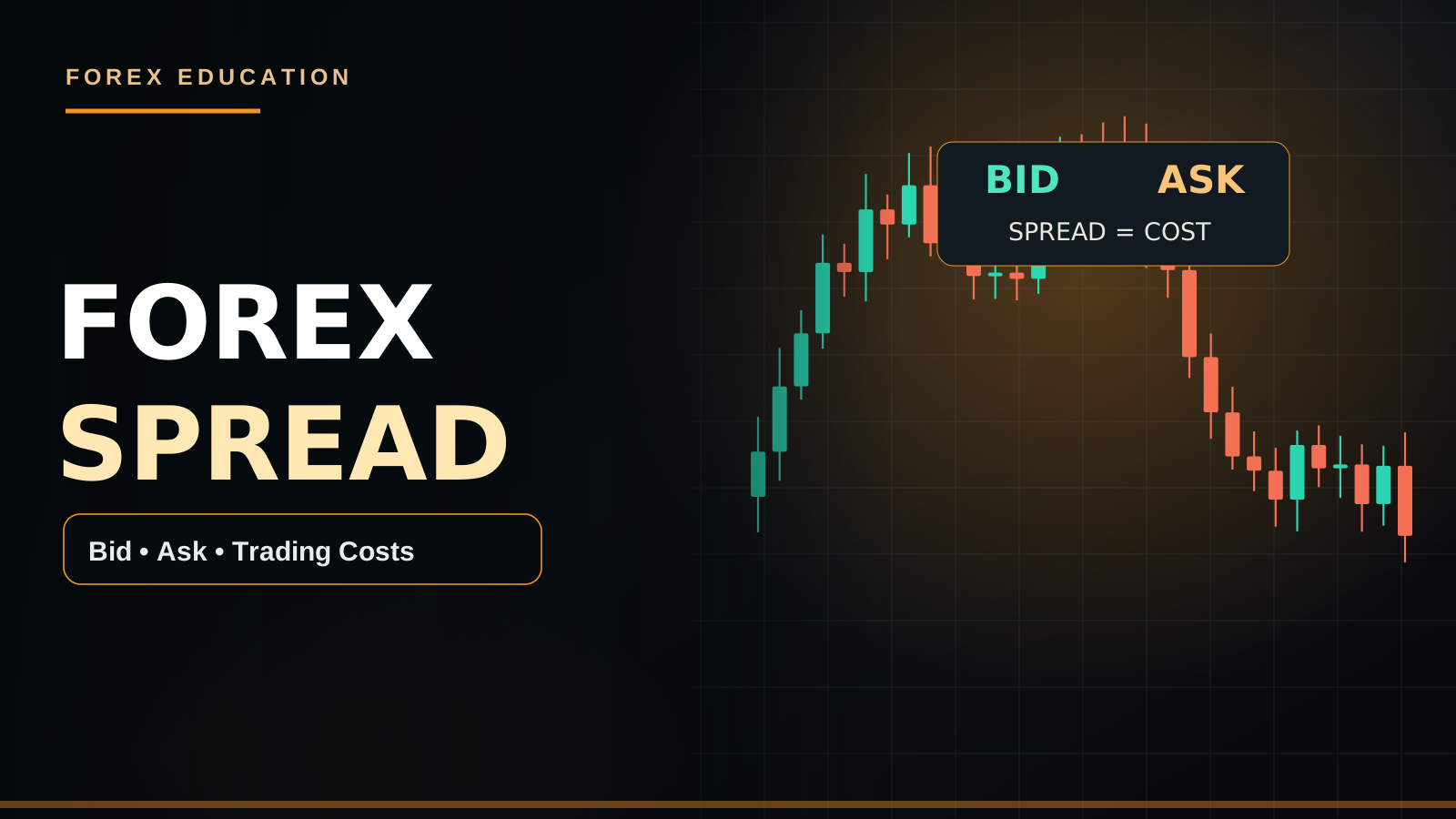
Spread is the difference between the broker's ask price and bid price. A buyer generally transacts at ask and a seller at bid. Understanding the spread prevents confusion when trades initially show a small loss even though the market price appears unchanged.
1. BID AND ASK EXAMPLE
Suppose EUR/USD has bid 1.10000 and ask 1.10012. The spread is 0.00012, or 1.2 pips. A trader who immediately bought at ask and closed at bid would lose approximately the spread before commission, assuming no movement and no other fees.
2. FIXED VS VARIABLE
Some accounts advertise approximately fixed spreads, often with restrictions; many have floating spreads. Variable spread can tighten in liquid periods and widen near market opens, news, rollover or sudden uncertainty. Broker quotes are also influenced by liquidity providers and execution models.
3. SPREAD IN SHORT-TERM STRATEGIES
A 1.5-pip spread consumes a substantial fraction of a scalper's 5-pip target, but a smaller fraction of a swing trade targeting 150 pips. Frequent round trips accumulate costs. Compare total costs—including commissions and financing—rather than selecting accounts by quoted spread alone.
4. SPREAD AND STOP EXECUTION
On platforms showing a bid chart, a buy may execute at ask while some exits and sell-side levels reference bid. Chart visualization and order execution can therefore seem different. Check platform definitions and whether stops trigger from bid or ask for the instrument.
5. MARKET VOLATILITY
High-impact NFP or CPI data can make spreads wide exactly when large candles attract attention. Slippage and insufficient depth may increase actual execution costs. A published 'from 0.0 pips' quote is not a promise of zero total trading costs.
6. HOW TO COMPARE BROKERS
Record average spread during your chosen trading session, commission per round turn, overnight financing, execution quality and withdrawal policies. Test on demo and small real-size conditions where appropriate; demo fills may be more favorable than live ones.
FAQ
Is spread the broker's only fee? No. Can spread be zero? It may be near zero temporarily on some accounts while commissions still apply. Is low spread always best? Not without evaluating execution.
BID, ASK AND THE QUOTED PRICE
Suppose EUR/USD shows Bid 1.10000 and Ask 1.10015. Spread is 0.00015, or 1.5 pips. A market Buy typically enters at Ask, while closing that long position commonly transacts on Bid. This is why a newly opened Buy can appear slightly negative even without a directional market move.
SPREAD COST RELATIVE TO THE TARGET
A 1.5-pip spread is a large fraction of a 5-pip scalping target but a smaller fraction of a 100-pip swing target. A strategy placing many trades may accumulate substantial round-trip costs. Compare net expectancy including commission, spread and swap rather than measuring raw chart moves only.
FLOATING SPREAD AND LIQUIDITY
During active liquid sessions, major-pair spread can sometimes narrow. Around rollover, weekend market reopening, CPI, NFP or unexpected events, spreads may widen. A broker advertising 'from zero spread' may charge commissions and does not promise zero spread every moment.
WHY YOUR BUY ORDER DOESN'T MATCH THE CHART
Some chart displays show Bid prices while Buy orders execute at Ask. A Buy Stop may therefore activate when Ask crosses its trigger even if the displayed Bid candle looks short of the level. Stop and pending-order rules vary by instrument and platform. Inspect quotes and contract specifications before assuming a platform error.
SPREAD AND STOP LOSS
If your strategy uses a small structural Stop Loss, ordinary spread expansion can consume much of the available distance or trigger exits earlier than expected. Do not solve this by arbitrarily removing protection. Either improve the setup conditions, widen the stop with smaller volume, or skip.
COMPARING ACCOUNTS
Record effective total trading cost in the session you intend to trade: average spread, commission per round turn, rollover financing and slippage. A lower displayed spread is not always better if execution is poor.
FAQ
Can spreads be negative? Quoting and execution conventions vary; retail accounts usually see nonnegative effective spread. Is zero spread a free trade? Not necessarily. Should beginners trade at NFP release because volatility is high? Not without recognizing wider execution risk.
WHY THERE ARE TWO PRICES
A broker commonly provides a Bid, the price at which the customer may sell, and an Ask, the price at which the customer may buy. The Ask is normally above the Bid. If EUR/USD Bid is 1.10000 and Ask is 1.10016, the spread is 0.00016, or 1.6 pips. A trader cannot assume every transaction occurs at the midpoint. Spread is a genuine part of the transaction even when no explicit commission appears.
WHAT "ZERO SPREAD" CAN MEAN
Some accounts advertise prices starting from a near-zero spread while charging a separate commission per side or per round trip. Other accounts charge wider spread and no explicit commission. Compare the total cost under the conditions you actually trade, not a promotional minimum. A quoted spread may be tight during active hours but widen during market rollover or unexpected events.
BID CHARTS AND ORDER TRIGGERS
The visible candlestick series may be based on Bid prices, while Buy orders fill on Ask. Imagine a trader places a Buy Stop at 1.1050. If Ask reaches 1.1050 but the displayed Bid candle remains slightly below, the order can appear to execute before the chart touched the line. That is not automatically a software error. Check chart display settings and instrument-specific trigger conventions.
A SCALPING COST EXAMPLE
A strategy aims to capture a gross favorable movement of 6 pips. Suppose spread effectively costs 1.5 pips, an equivalent commission 0.8 pip and average slippage 0.3 pip. Approximate net improvement is only 3.4 pips in equivalent terms, before swap if applicable. If losers incur comparable or larger costs, apparent paper expectancy can disappear. Very small targets are particularly sensitive to execution quality.
SWING TRADING AND OVERNIGHT FINANCING
A trader targeting 150 pips may care less about a 1.5-pip spread than a five-pip scalper, but overnight financing can become material when a position is held for days. Financing rates can differ for long versus short positions and may include rollover conventions. Do not ignore swaps merely because the entry spread seems small. Product documentation is the correct source for broker fees.
WHY SPREAD WIDENS
Liquidity suppliers change quoted prices and available depth when uncertainty rises. Around CPI, NFP, major elections, market reopenings or daily rollover, the cost of immediate execution can increase. Unexpected news may create order-book gaps. Different broker liquidity arrangements can produce different quotes at the same moment. A fixed stop in pips does not imply fixed monetary transaction costs through these conditions.
SPREAD AND STOP LOSS ACTIVATION
The trigger price for Stop Loss can depend on position direction and trading platform conventions. A wide spread can cause a stop to activate even if the candle chart appears not to have reached the level you expected from the other side of the quote. Test on demo and read specifications for Buy and Sell exit mechanics. Keep an execution log rather than labeling every difference manipulation.
COMPARING TWO ACCOUNT TYPES
Suppose Account A has a typical 1.2-pip spread and no stated commission, while Account B has 0.2 pip average spread plus 0.7 pip per round-turn equivalent commission. Account B appears cheaper under those assumptions, but realistic slippage and spread during your active session may change the comparison. Also evaluate regulation, withdrawal policies and server stability. The advertised spread is just one decision factor.
MARKET ORDERS VERSUS LIMIT ORDERS
Market orders seek immediate execution at available prices and may suffer slippage. Limit orders state an acceptable price but might remain unfilled. In a fast breakout, a limit order can miss the move; a market order can obtain a worse fill. Neither eliminates the need for confirmed chart structure and risk calculations. Choose order type according to the strategy, not just the lowest possible spread.
HOW TO RECORD TRUE TRADING COSTS
For each trade save requested entry, actual fill, requested exit, actual exit, Bid/Ask spread near entry, commission, overnight financing and account-currency conversion. Calculate realized net profit and risk multiple. This tells you whether a strategy's apparent success was due to chart movement or whether costs absorbed most gains.
FAQ
Does Spread exist only in Forex? No, many markets have Bid/Ask spreads. Is low Spread equal to low risk? No. Do wide spreads always prove a dishonest broker? No; changing liquidity can widen spreads legitimately. Can a broker's execution still be poor despite tight advertised spreads? Yes.
A SIMPLE TOTAL-COST WORKSHEET
For each broker account type, record the average entry spread during your normal session, commission for the full round trip, typical slippage in ordinary conditions and swap cost if positions are held overnight. Convert the monetary commission into a pip equivalent using the position's pip value. For example, if 0.10 lot EUR/USD has $1 pip value and round-trip commission is $0.70, commission equals roughly 0.7 pip. Combining that with a 0.8-pip effective spread produces approximately 1.5 pips in direct transaction costs before slippage. Use measured rather than advertised values when testing.
CONCLUSION
Include spread and other costs in strategy testing, Stop Loss planning and risk calculations.
PIPSEPAISA FREE COURSES
Sir Sajid Khan Ghori — Free Forex Technical Analysis Course. Want to join? Message the PipSePaisa team on WhatsApp or open the Courses tab at www.pipsepaisa.com for enrollment.
Sir Ghulam Abbas — Free Forex Fundamental Analysis Course. Message on WhatsApp or visit the Courses tab to enroll.
RISK NOTICE
Educational examples are hypothetical; leveraged trading can cause capital loss. Not financial advice.
Read in Roman Urdu
INTRODUCTION
Spread broker ki Ask aur Bid price ka difference hota hai. Buy usually Ask par aur Sell Bid par execute hoti hai. Isi wajah se entry ke foran baad position negative show ho sakti hai.
1. SPREAD EXAMPLE
EUR/USD Bid 1.10000 aur Ask 1.10012 ho to spread 1.2 pips hai. Agar price move na kare aur aap foran close karein, to roughly spread ki cost hogi, commission alag.
2. FIXED AUR FLOATING
Kuch brokers fixed-type spread offer karte hain, bohat se floating spread. News, rollover aur low liquidity mein spread widen ho sakta hai.
3. SCALPING PAR EFFECT
5-pip target wali scalp mein 1.5-pip spread bohat bada cost share hai. 150-pip swing target mein relative effect chhota ho sakta hai. Frequent trades ki total cost zaroor calculate karein.
4. BID/ASK CHART
Kuch platforms Bid price chart par show karti hain lekin Buy Ask par fill hoti hai. Is liye entry chart level se different lag sakti hai. SL trigger rules instrument ke mutabiq check karein.
5. NEWS VOLATILITY
CPI/NFP release par spread, slippage aur execution uncertainty barh sakti hai. 'Zero spread' advertisement ka matlab zero total cost zaroori nahi.
6. BROKER COMPARISON
Average spread, commission, swap, execution aur withdrawal terms dekhein. Sirf marketing quote par decision na lein.
FAQ
Kya spread hi only charge hai? Nahi. Low spread hamesha best? Execution aur commission bhi matter karte hain.
BID AUR ASK EXAMPLE
EUR/USD Bid 1.10000 aur Ask 1.10015 ho to Spread 0.00015 yani 1.5 pips hai. Buy order normally Ask par open hota hai aur usay close karte waqt Bid price relevant hoti hai. Isi liye nayi Buy trade shuru mein thori negative show ho sakti hai.
SCALPING PAR SPREAD KA EFFECT
5-pip scalping target ke against 1.5-pip spread bohat bada cost hai. 100-pip swing target par relative cost kam ho sakti hai. Agar strategy bohat frequent trades karti hai to round-trip commission aur spread total result damage kar sakte hain. Net profit calculate karein.
FLOATING SPREAD
Active sessions mein major pairs ka spread comparatively tight ho sakta hai. Rollover, weekend reopening, CPI/NFP aur unexpected news par spread wide ho sakta hai. 'From 0 spread' marketing ka matlab hamesha zero cost nahi; commission alag lag sakti hai.
CHART PRICE AUR ORDER PRICE DIFFERENCE
Kai platforms par chart Bid show karta hai, lekin Buy Ask par execute hoti hai. Is liye Buy Stop trigger ho sakta hai jab Ask level cross kare, chahe Bid candle us level tak nazar na aaye. Platform aur symbol specification check karna zaroori hai.
SPREAD AUR TIGHT SL
Agar structural Stop Loss bohat chhota ho, spread expansion exit ko jaldi trigger kar sakti hai. Iska solution Stop Loss completely remove karna nahi. Better setup, logical SL, smaller lot ya No Trade consider karein.
BROKER COMPARISON
Average Spread, Commission, Swap, Execution aur Slippage compare karein, khas tor par usi session mein jab aap trade karte hain. Sirf advertised spread par broker choose na karein.
FAQ
Zero Spread ka matlab free? Zaroori nahi. NFP ke waqt spread widen? Haan ho sakta hai. Short-term strategy mein costs zyada matter? Haan.
BID AUR ASK DO PRICES KYUN?
Broker normally Bid aur Ask quote karta hai. Bid wo price hai jahan customer Sell kar sakta hai, Ask wo jahan Buy kar sakta hai. Aam tor par Ask Bid se upar hoti hai. Agar EUR/USD Bid 1.10000 aur Ask 1.10016 ho to Spread 0.00016 yani 1.6 Pips hai. Trader ye assume nahi kar sakta ke har order Chart ke midpoint par fill hoga. Explicit Commission na bhi ho, Spread ek actual trading cost ho sakti hai.
ZERO SPREAD ACCOUNT KA REAL MEANING
Kuch brokers 'From 0.0 Spread' advertise karte hain lekin separate Commission charge karte hain. Doosre brokers comparatively wide Spread aur no explicit Commission offer karte hain. Dono ko compare karte waqt total round-trip cost dekhna hota hai. Marketing minimum spread ka matlab har session aur har news event mein permanent zero nahi. Rollover aur low-liquidity conditions mein quotes change ho sakti hain.
CHART PRICE AUR ORDER TRIGGER
TradingView ya MT5 par visible candle kabhi Bid-based quote show karti hai, jabke Buy order Ask par fill hoti hai. Maan lein Buy Stop 1.1050 par hai. Ask 1.1050 touch kare lekin displayed Bid candle us se thori neeche ho, phir bhi Buy Stop trigger ho sakta hai. Aapko lag sakta hai chart ne level touch nahi kiya, lekin Bid/Ask difference reason ho sakta hai. Broker instrument trigger rules check karein.
SCALPING COST KA NUMERICAL EXAMPLE
Suppose 6-Pip Gross Target hai. Spread equivalent cost 1.5 Pips, Commission equivalent 0.8 aur average Slippage 0.3 Pip ho, to approximate Net Gain sirf 3.4 Pips equivalent reh sakti hai, additional financing ignore kar ke. Agar losing trades mein bhi similar costs lagti hain to backtesting ka apparent edge weaken ho sakta hai. Isi liye bohat small TP strategy mein Spread aur Execution Quality especially important hai.
SWING TRADING AUR SWAP
Swing Trader 150-Pip target rakhta hai to 1.5-Pip Spread relative share small ho sakta hai. Lekin position kai din open rehne par Swap ya Overnight Financing cost significant ho sakti hai. Long aur Short financing charges different ho sakte hain. Broker ke rollover schedule aur product terms check karein. Chhote Spread ka matlab automatically low total cost nahi.
SPREAD WIDEN KYUN HOTI HAI?
Market Liquidity Providers uncertainty, volatility aur available depth ke hisaab se quotes adjust karte hain. CPI, NFP, unexpected political events, Monday reopen ya daily rollover par Spread wider ho sakti hai. Broker ke different liquidity arrangements bhi quotes ko affect kar sakte hain. Same moment do brokers ke Bid/Ask thore different nazar aa sakte hain. Har wide spread ko immediate manipulation kehna inaccurate hai.
STOP LOSS TRIGGER AUR SPREAD
Buy aur Sell positions ka Stop Loss trigger Bid/Ask conventions se linked ho sakta hai. Agar Spread suddenly wide ho jaye to SL us waqt activate ho sakta hai jab chart ki opposite quote ne aapka expected level visibly touch na kiya ho. Demo testing aur broker specification se ye mechanics clear karein. Agar difference aaye to execution log save karein; sirf suspicion par conclusive accusation na lagayein.
DO ACCOUNT TYPES COMPARE KAREIN
Account A: Average Spread 1.2 Pips aur zero explicit Commission. Account B: Average Spread 0.2 Pip aur round-trip equivalent Commission 0.7 Pip. In simplified assumptions mein Account B cheaper lag sakta hai. Lekin actual trading session ke Spread, Slippage aur filled prices compare karne honge. Broker Regulation, Withdrawals aur Stability bhi relevant hain. Sirf marketing Spread dekh kar Broker Select na karein.
MARKET VS LIMIT ORDER
Market Order available quote par immediate execute hone ki koshish karta hai aur Slippage ho sakti hai. Limit Order acceptable price set karta hai lekin fill miss bhi ho sakti hai. Fast breakout mein Limit entry skip ho jati hai aur Market entry worse price par mil sakti hai. Dono types mein entry confirmation aur Money Risk ki zaroorat same rehti hai. Order Type ko strategy ke mutabiq select karein.
ACTUAL COST JOURNAL
Har trade mein Requested Entry, Actual Fill, Requested Exit, Actual Exit, Spread, Commission, Swap aur Conversion Charge note karein. Gross Pips aur Net Dollar Profit ko separate measure karein. Agar strategy chart par successful dikh rahi hai lekin Net Expectancy weak hai to Trading Costs possible reason ho sakti hain. MT5 History data bhi useful hota hai.
FAQ
Spread sirf Forex mein? Nahi. Low Spread ka matlab safe trade? Nahi. Wide Spread hamesha dishonest broker? Nahi, liquidity conditions matter. Tight advertised Spread ke bawajood execution poor ho sakti hai? Haan.
COMMISSION KO PIPS MEIN KAISE CONVERT KAREIN?
Agar EUR/USD 0.10 Lot par Typical Pip Value $1 hai aur Full Round-Trip Commission $0.70 hai to Commission ka Pip Equivalent 0.7 Pip hai. Agar Effective Spread 0.8 Pip bhi ho, to combined direct cost approximately 1.5 Pips banti hai, Slippage/Swap se pehle. Isi liye Zero Spread Account dekh kar assume nahi karna ke saari trading free ho gayi. Alag brokers ke Quote Conditions aur Commission Schedules compare karein.
SPREAD JOURNAL BANAYEIN
Apne normal Trading Session mein kuch din Spread note karein: Asian, London aur New York Open par typical EUR/USD Spread? CPI/NFP ke aas paas kitni widen hui? Requested Entry aur Actual Fill mein kitna difference? Agar 5-Pip Scalping Strategy Normal Spread 0.8 par theek lagti hai lekin News par 4 Pips ho jati hai, to wahi system har waqt same result nahi dega. Trading Rules mein Maximum Acceptable Spread define karna useful ho sakta hai.
BROKER TRANSPARENCY
Spread aur Commission clear hone ke saath Regulation, Withdrawal Conditions, Order Execution Policy aur Financing bhi evaluate karein. Low Spread ka marketing banner alone Broker Safety establish nahi karta.
CONCLUSION
Har strategy ki backtesting aur live risk calculation mein spread ko include karein.
PIPSEPAISA FREE COURSES
Sir Sajid Khan Ghori ka Free Forex Technical Analysis Course join karne ke liye WhatsApp par message karein ya www.pipsepaisa.com ke Courses tab par enroll karein.
Sir Ghulam Abbas ke Free Forex Fundamental Analysis Course ke liye bhi WhatsApp ya Courses tab use karein.
DISCLAIMER
Examples sirf education ke liye hain, live signals nahi. Leveraged trading mein loss ho sakta hai.
Educational content only. Trading involves risk. Always use independent analysis and appropriate risk management.