
Forex Slippage Explained: Requotes, Market Orders, Stop Loss Fills and News Execution
PipSePaisa • Forex Education & Research
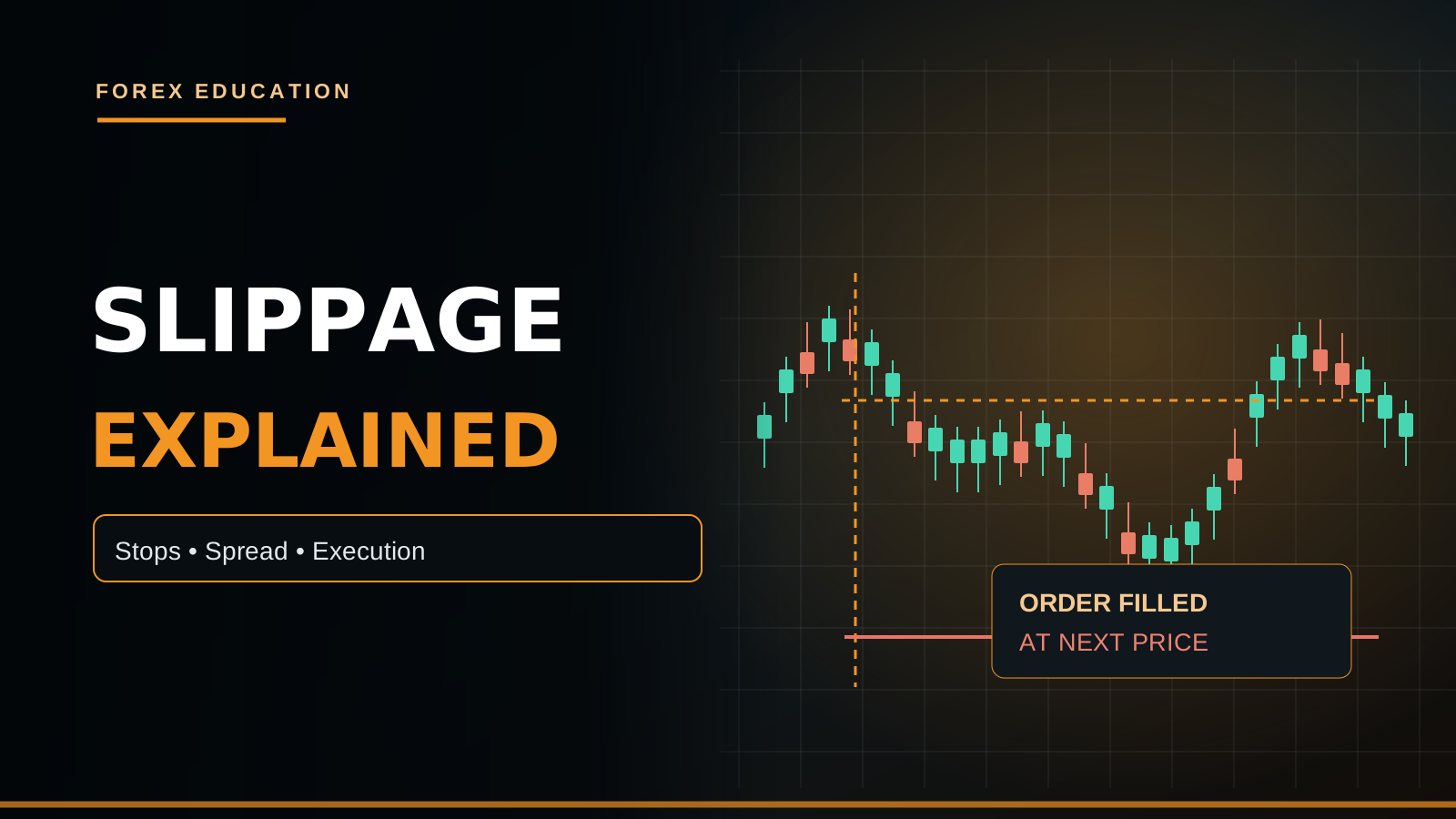
WHAT IS SLIPPAGE IN FOREX?
Slippage is the difference between the requested or anticipated execution price and the price at which an order actually fills. It can occur when market prices change or available liquidity is insufficient at the requested level before the order is executed. Slippage can be positive or negative, although unfavorable cases are more noticeable. A trader might expect to buy EUR/USD at 1.1000 but receive 1.1003, creating three pips of adverse entry slippage. Actual treatment depends on broker execution rules.
HOW MARKET ORDERS REALLY EXECUTE
A market order requests immediate execution at an available market price, subject to broker/venue terms. It is not generally a promise to execute at the precise last price displayed on the chart. Buying commonly involves the ask side while selling commonly involves bid liquidity, which means the last quoted price and executable price may differ. During fast movement, the best available ask or bid can move between the click and the fill. Understand this before assuming every visible tick is a guaranteed obtainable price.
POSITIVE AND NEGATIVE SLIPPAGE
For a Buy, filling higher than expected is usually adverse, while filling lower can be favorable. For a Sell, a lower fill may be adverse and a higher fill favorable. Order side matters: traders should not call every upward difference 'positive slippage'. Suppose a trader closes a short at 1.1050 but the actual Buy-to-Close fills at 1.1054; the price difference increases loss by four pips. Broker execution policies determine whether and when favorable movements are passed through.
SLIPPAGE IS NOT THE SAME AS SPREAD
Spread is the difference between quoted bid and ask, whereas slippage is a difference between expected and realized execution. A trader can face spread costs even with zero slippage. Conversely, prices may jump enough that an order slips despite a relatively small prior spread. Confusing these terms makes performance analysis unreliable. Keep a record of the displayed quote when the order was submitted, the order type, fill price, spread and any later fees to separate the different execution costs.
WHAT IS A REQUOTE?
A requote occurs in certain broker execution models when the originally requested price is no longer offered and the trader is asked to accept or reject a different quote. This is different from a market-execution fill automatically completed at a new available price. Not every broker or account type uses requotes, and their behavior depends on execution settings. A requote is not by itself proof of wrongdoing, though a pattern of poor service deserves investigation. Always check the terms for the actual account.
MARKET, LIMIT AND STOP ORDERS
A market order prioritizes getting executed rather than a guaranteed exact price. A limit order typically expresses a specified maximum price for a Buy or minimum price for a Sell, potentially limiting unfavorable price movement but not ensuring a fill. A stop order generally becomes active once its trigger condition is met and may execute at a different price in fast markets. Exact trigger and execution rules vary by broker and exchange. Do not assume a Buy Stop functions as a Buy Limit.
STOP LOSS PRICE IS A TRIGGER, NOT ALWAYS A FILL
A standard stop-loss order sets a price at which an exit should be initiated when relevant conditions are met, under the broker's rules. It generally does not guarantee the final price during a gap or thin market. For a EUR/USD Buy with stop at 1.0980, a violent move could produce an exit at 1.0974, six pips below the intended level. That additional loss affects risk. A stop is critical for disciplined exits, but it does not eliminate all execution uncertainty.
PRICE GAPS AND WEEKEND RISK
Forex trading has weekly interruptions and market-holiday schedules. Prices can reopen at a level different from the prior close after significant news, causing stop orders to execute beyond their triggers. Gaps can also appear intraday in specific feeds during thin liquidity or major announcements. Some instruments have more pronounced opening gaps than highly liquid major pairs. Planning a position across weekends requires considering broker market hours, possible price discontinuities and how much additional loss the account can tolerate.
WHY NEWS RELEASES CAUSE SLIPPAGE
NFP, CPI and FOMC reports can cause traders to update prices immediately. Quotes may change faster than a retail order can reach and be processed by the execution venue. Liquidity providers may widen quotes or reduce offered depth. A chart can show an impressive one-minute directional candle even though many traders could not fill near its opening price. A news strategy that assumes perfect entry and stop prices may look profitable in a backtest but perform very differently in real trading.
LIQUIDITY AND ORDER SIZE
Execution quality depends partly on how much trading interest is available at a given price and the size of the order. A small order in a liquid major pair may fill more easily than a large order in a thin exotic pair, but even small orders can slip in extreme conditions. Larger orders may execute across multiple available prices, depending on venue and broker aggregation. The chart does not reveal every liquidity provider's available quantity. It is safer to avoid extrapolating a one-lot fill to an enormous volume.
BID/ASK CHARTS AND STOP TRIGGERS
Some charting interfaces display bid-based candles, mid prices or an instrument-specific convention, while buy and sell orders use bid/ask or other defined triggers. A Sell Stop or a Buy Stop might activate when the relevant quote touches its trigger even if the main candle view appears slightly different. Brokers can have stop-level, freeze-level and minimum-distance restrictions. A trader should first inspect the platform quote settings before concluding that a stop was triggered incorrectly.
SLIPPAGE IN GOLD XAUUSD
Gold CFD prices can move rapidly around US inflation, bond yield surprises and geopolitical news. Brokers use contract sizes, point sizes and quote increments that vary, so a three-dollar adverse fill is not the same as three Forex pips. Monetary impact equals adverse price distance times relevant contract exposure and volume, adjusted to account currency under the broker rules. Before using a Gold EA, verify Stop Level, Bid/Ask handling, Lot Size and the broker's execution conditions. No indicator can guarantee zero slippage.
A EUR/USD EXECUTION EXAMPLE
Suppose a trader plans a EUR/USD Buy at 1.1050 with a stop at 1.1030 and target at 1.1090. The intended risk is twenty pips and reward forty, or 1:2 before costs. If the actual Buy fills at 1.1053 and the stop remains fixed at 1.1030, the real entry-to-stop distance becomes twenty-three pips and the available reward thirty-seven. The effective nominal ratio is about 1:1.61, even before spreads or fees are separately assessed. Small fill differences matter for tight systems.
A GOLD RISK EXAMPLE
Imagine a hypothetical XAUUSD position is opened at a price of 2400 with a planned stop at 2390 and a target at 2420. If the Buy fills at 2402, the structural stop distance rises from ten to twelve dollars while target room falls from twenty to eighteen dollars. The nominal geometry declines from 2R to 1.5R. Monetary risk still depends on the CFD contract multiplier and volume. These figures are illustrative rather than current Gold levels or individualized trading instructions.
WHY LIMIT ORDERS CAN MISS TRADES
A Buy Limit places a price constraint, but price touching the desired level does not necessarily mean the account received a fill. Available queue priority, executable size and venue rules can matter. Backtests that assume every historical candle Low touching a Limit automatically filled the entire order can overestimate entry frequency. A trader who requires a retest must separately record setups that never returned or returned without fill. Missing an opportunity is not the same as incurring a trading loss.
REQUOTES AND DEVIATION SETTINGS
Certain trading terminals allow a permitted price deviation or similar tolerance for relevant execution modes. A narrow tolerance may reject more orders during fast movement; a broad tolerance can allow fills at prices further from the requested one. The exact result depends on order mode and broker implementation. There is no universal best number of points to enter for every Forex pair or Gold CFD. A trader should understand how many price points correspond to their acceptable account risk.
SLIPPAGE AND EXPERT ADVISORS
An EA can send orders extremely quickly, but code speed does not guarantee venue liquidity or instant matching. Algorithms must account for SymbolInfo quote data, broker-specific filling modes, rejection codes, trade context, changing spread and the final position price. A Strategy Tester using ideal or simplified tick/fill assumptions can differ from actual live execution. A robust EA logs attempted price, requested order type, actual deal price, stop price and server retcodes. Recovery systems that increase size after slippage-related losses can magnify risk.
BROKER EXECUTION QUALITY
When evaluating execution quality, compare spreads, commissions, fill timestamps, rejection patterns and slippage distributions across representative market conditions. Check whether the broker publishes an execution policy and whether independent regulatory information is relevant to the jurisdiction. One delayed order does not prove manipulation, while a consistent pattern of unusually unfavorable execution deserves documented investigation. Do not rely only on marketing claims of zero spread or instant execution. Net execution quality matters more than a slogan.
HOW TO MEASURE SLIPPAGE IN A JOURNAL
For every trade, save requested price, actual fill, order side, symbol, timeframe, quote timestamp, order type, spread and whether major news was underway. Compute adverse slippage in the symbol's pip or tick unit. Separate entry slippage from stop slippage and favorable from unfavorable outcomes. Compare median and large adverse observations rather than reporting only a convenient average. Conditions may differ by time of day or event; recording sessions allows better analysis than anecdotal screenshots.
STRESS-TEST TRADING COSTS
Suppose a strategy averages a modest +0.2R per trade before slippage. An additional average adverse execution cost of 0.25R could eliminate the apparent edge. Instead of arguing from one ideal backtest, rerun results with several spread and slippage scenarios. Intraday scalping is often more sensitive to transaction costs than strategies with larger target distances, although every style has risks. Evaluate net R and drawdown after costs, including the possibility of occasional large stop fills.
RULES FOR HIGH-IMPACT NEWS
A practical plan might prohibit opening new positions immediately before or after major CPI, NFP and FOMC releases unless a separately validated news strategy explicitly permits it. Another plan may require a maximum allowed spread and a completed M5 candle before trading. These choices reduce certain avoidable risks but cannot guarantee zero slippage. If a dramatic Gold candle moves without offering a safe entry, not trading remains valid. It is better to miss a move than to conceal the true dollar risk.
SLIPPAGE FAQ
Can a Stop Loss execute beyond its price? Yes, in relevant fast or gapping conditions. Can favorable slippage occur? Yes, depending execution policies. Are spread and slippage identical? No. Can a Limit Order miss despite a wick touching the price? Yes. Is a requote the same as an executed slip? No. Does an EA guarantee zero slippage? No. Practical protection requires understanding actual broker rules, using correct position sizing, checking news and comparing real fills against the backtest.
PIPSEPAISA FREE COURSES
Learn execution confirmation and technical price structure in Sir Sajid Khan Ghori's Free Forex Technical Analysis Course, and market-moving economic news in Sir Ghulam Abbas's Free Forex Fundamental Analysis Course. Visit www.pipsepaisa.com Courses to check enrollment information. This article is educational, not investment advice; leveraged trading risks substantial loss.
Read in Roman Urdu
FOREX SLIPPAGE KYA HAI?
Slippage Requested ya Expected Order Price aur Actual Fill Price ka Difference hai. Market fast move kare ya selected Level par sufficient Liquidity na ho to Order different price par execute ho sakta hai. Negative Slippage extra loss create kar sakti hai, Positive Slippage better fill bhi possible. EUR/USD 1.1000 par Buy expect karein magar Actual 1.1003 mile to 3 Pips adverse slippage hai. Broker Execution Model aur Order Type matter karti hain.
MARKET ORDER FILL
Market Order current available Market Price par execution request karti hai, chart par exact Last Displayed Price lock guarantee nahi. Buying Ask aur Selling Bid side se related ho sakti hai. Click aur Broker Execution ke beech Quote change ho sakta hai. Fast M1 Candle par price 1.1000 show ho aur actual Ask 1.1002 ho, to entry initially expected se worse. Market Order, Buy Stop aur Limit Order ke fills alag rules follow karte hain. Contract Specification read karein.
POSITIVE NEGATIVE EXAMPLE
Buy Entry expected 1.1000 aur fill 1.1003 ho to 3 Pip Negative Slippage. Buy 1.0998 par fill ho to favorable. Sell Entry expected 1.1000 aur fill 1.0997 ho to Negative Slippage; Sell higher fill possible positive. Trade Close par bhi directional logic apply karein. Short SL 1.1050 par Trigger aur Actual Buy Close 1.1054 ho to extra 4 Pip Loss. Har Difference automatically Broker Fraud prove nahi.
SLIPPAGE VS SPREAD
Spread Bid aur Ask Difference hai. Slippage Expected Order Price vs Actual Fill Difference hai. Zero Slippage hone par bhi Spread Cost ho sakti hai. News par Spread Wide aur Slippage simultaneously bhi possible. Agar 3 Pip Spread aur 5 Pip Slippage ho to total entry cost analyze karte waqt both components distinguish karein. Trading Journal mein Order Submission Quote, Bid/Ask, Fill aur Time record karein. Har entry loss ko simply spread kehna inaccurate.
REQUOTE KYA HOTA HAI?
Requote kuch Execution Models mein tab hota hai jab Requested Price available na rahe aur Broker New Quote Accept/Reject karne ko prompt de. Market Execution mein Order available new Price par directly fill bhi ho sakta hai instead. Har Broker/Account par Requotes same nahi. One Requote deliberate manipulation ka proof nahi, lekin repeated poor fills log karke investigate kar sakte hain. MT5 Symbol aur Broker Execution Mode verify karein. Transparency important hai.
MARKET LIMIT STOP DIFFERENCE
Market Order execution seek karti hai without fixed guaranteed fill. Buy Limit specified max price par ya better fill seek kar sakti hai, magar fill guarantee nahi. Buy Stop trigger ke baad Market-type fill different Price par possible. Sell Limit aur Sell Stop ki logical functions bhi opposite. Some Brokers Stop Limit combinations support kar sakte hain, but Order Trigger aur Fill details verify karein. Stop Loss Hit hone ka matlab chart line ke exact Price fill guaranteed nahi.
STOP LOSS SLIPPAGE
Standard Stop Loss Market certain Price Trigger hone par exit initiate karta hai, necessarily exact same fill nahi. EUR/USD Buy SL 1.0980 hai, market sudden gap/fast candle se 1.0974 par fill ho sakti hai. Six extra Pips Actual Loss increase karein gi. Structural SL use karna still important hai, lekin SL 100% fixed Dollar Loss Guarantee nahi. High Impact News aur Thin Liquidity ke waqt Stop Execution Risk greater ho sakta hai. Position Size appropriately conservative rakhein.
WEEKEND GAPS
Forex Weekends/Holidays ke around Markets temporarily close hoti hain. Monday Open previous Friday Close se significantly different ho sakta hai, especially major geopolitical/news events par. Pending Stop Loss Opening Available Price par fill ho sakti hai, planned level par necessarily nahi. Gold CFD Trading Hours Broker specific hain. Overnight/weekend hold Trade par Extra Gap Risk aur Swap Costs bhi. Risk Budget decide karte waqt potential negative slippage consider karein.
CPI NFP FOMC RISK
NFP, CPI aur Fed Decision par Trading Prices fast Reprice hoti hain. Quotes quickly shift aur Liquidity Providers Spread Wide kar sakte hain. Selected Level par available executable quantity kam ho sakti hai. M1 Candle ka exact open historical chart mein dikh sakta hai magar Live Market par fill wahan milna guaranteed nahi. News Trading Backtest perfect candle price assume kare to Real Performance unrealistic hogi. First huge candle chase na karein.
ORDER SIZE LIQUIDITY
EUR/USD major Pair normal market mein often better Liquidity show karti hai compared with thin Exotic Pairs, lekin even small Lot News Shock par slip possible. Very Large Volume selected Price par available Depth exceed kare to Multiple Levels par fill ho sakti hai depending venue. Retail Candle exact worldwide executable quantity display nahi karti. One 0.01 Lot Demo Fill ko 100-Lot Order expected execution se compare na karein. Order Size aur Liquidity Quality important hain.
BID ASK CHART CONFUSION
Some MT5/TradingView Charts Bid Candle show karti hain, kuch Mid/other conventions. Buy/Sell Orders relevant Ask/Bid Quote aur Broker Trigger Rules se execute hoti hain. Isliye Chart Line par Price Touch visibly na ho phir bhi SL/Stop Order Trigger ho sakti hai, depending actual Ask. Broker Stop-Level/Freeze-Level restrictions bhi. Apparent Stop Error ko investigate karte waqt Quote Type, Spread at time aur Server Logs check karein.
GOLD XAUUSD SLIPPAGE
Gold Price CPI/FOMC par bohat fast move kar sakti hai. $3 Gold Price Difference ko automatically EUR/USD ke 3 Pips na samjhein. XAUUSD actual Dollar Loss Broker Contract Size, Lot aur Account Currency par depend karta hai. EA Code mein Bid/Ask, Point Size, Tick Size aur StopLevel correctly handle hona chahiye. Gold Scalping with very tight SL News par Slippage se severely impact ho sakti hai. Strategy Backtest Broker Specification ke saath test karein.
EUR/USD NUMERICAL EXAMPLE
Planned EUR/USD Buy 1.1050, SL 1.1030 aur TP 1.1090 ho to Intended Risk 20 Pips, Reward 40 Pips, RR 1:2. Actual Buy fill 1.1053 ho jaye aur SL/TP same rakhein to Real Risk 23 Pips, Reward 37 Pips. RR approximately 1:1.61, additional charges se pehle. Scalping Strategies mein 3-Pip Slippage Expected Edge significantly reduce kar sakti hai. Backtest planned vs actual fills separately record karein.
GOLD RR EXAMPLE
Hypothetical Gold Buy planned Price 2400, Stop 2390 aur Target 2420. Intended Risk $10 Price Distance aur Reward $20 Price Distance = 1:2. Actual Buy Fill 2402 ho to Structural Stop Distance $12 aur Target Room $18, Geometry 1:1.5. Account Dollar Risk Lot aur Gold Contract ke according calculate karein. $2 Slippage same financial impact every broker par nahi. Historical Gold Level example Live Signal nahi.
LIMIT ORDER NO FILL
Buy Limit desired Price cap de sakti hai lekin Candle Wick Level Touch kare to Full Order Fill guaranteed nahi. Available Volume, Queue Priority aur Broker Rules impact kar sakte hain. Backtest Every H1 Low Touch ko automatic filled Trade assume kare to too many winners count ho sakte hain. Retest Model mein Price Level ke qareeb aaye magar Bid/Ask Fill na mile, No Fill Record. Missed Trade Account Dollar Loss nahi. Entry Rules consistency important.
DEVIATION SETTING
Some MT5 Order Settings Allowed Deviation/Slippage Points define kar sakti hain under selected Execution Mode. Tight Tolerance par Order Reject/Requote zyada, Wide Tolerance par worse fill accept ho sakti hai. Har Broker aur Symbol same treatment nahi. 10 Points EUR/USD aur XAUUSD mein different price steps represent kar sakte hain. Lot Size aur Account Risk ke mutabiq acceptable fill tolerance determine karein. Arbitrary largest Deviation set karna risk control nahi.
EA AUTO TRADING EXECUTION
MT5 EA milliseconds mein Order send kar sakta hai, lekin fast Code available Broker Liquidity create nahi karta. EA Quote Bid/Ask, Filling Mode, Broker Retcodes, Spread Filter, SL Min Distance aur Actual Deal Fill log kare. Historical Tester ideal Fill assume kare to Live Results different. EA Trade Place fail ho aur Code repeat Orders send kare to unexpected Multiple Exposure. Recovery Lot increase karna Slippage Loss after dangerous. Robust Logging aur Risk Limit important hain.
BROKER QUALITY CHECK
Broker ka Spread, Commission, Fill Timestamp, Requotes, Order Reject Codes aur Slippage Record compare karein across normal and news conditions. Execution Policy aur relevant Regulator details verify kar sakte hain. One Bad Fill deliberate Attack prove nahi, lekin repeated abnormal adverse fills ko logs/screenshots ke saath investigate karein. 'Zero Spread' Account par Commission aur Slippage still ho sakti hai. Net Cost aur reliability marketing claims se zyada matter.
SLIPPAGE JOURNAL
Each Trade par Requested Entry, Actual Fill, Buy/Sell Side, Symbol, Bid/Ask, Server Timestamp, Spread, Order Type aur CPI/NFP/FOMC Event Status record karein. Slippage Pips/Points mein calculate karein according Symbol. Entry aur Stop Slippage separate, Favorable/Adverse separate. Average ke saath Worst Events aur Median analyze karein. London, NY aur Roll-Over Time ke Results compare karein. Proper Journal ke baghair Broker vs Strategy Issue judge karna difficult.
COST STRESS TEST
Strategy Historical Average +0.2R per Trade before Slippage ho. Agar Actual Execution se Average -0.25R extra cost aa jaye to Expected Net Edge negative ho sakti hai. Backtest Normal, Wide Spread aur News Slippage Scenarios compare karein. Tight 5-Pip Target Scalping Cost sensitive ho sakti hai relative larger Swing Trade, lekin every strategy ka risk distinct hai. Net R after Commission/Swap aur Worst Stop fills include karein.
NEWS AVOID PLAN
CPI, NFP, FOMC ke Around Predefined No-Trade Window set kar sakte hain unless separately tested news model. M5 Full Candle Close aur Maximum Spread Filter require karna possible. Ye Rules slippage zero guarantee nahi, magar uncontrolled impulses reduce kar sakti hain. Gold 100 Pips without retrace move kare to Late Chase new risky setup hai. No Confirmation = No Trade. Accidental Early Entry ko old Backtest Win Rate se justify na karein.
SLIPPAGE FAQ FINAL
Stop Loss Exact Price se worse fill? Possible. Positive Slippage? Haan, Broker execution ke mutabiq. Spread same as Slippage? Nahi. Limit Candle Wick touch but No Fill? Possible. Requote aur Completed Slipped Fill same? Nahi. EA Zero Slippage Guarantee? Nahi. Important Rule Broker Terms, Structural SL, Equity Risk Lot aur News Calendar check karein. Price Request aur Actual Fill difference Journal mein likhein. M5 Close aur Confirmation ke bina Trade nahi.
PIPSEPAISA FREE COURSES
Sir Sajid Khan Ghori ke Free Forex Technical Analysis Course aur Sir Ghulam Abbas ke Free Forex Fundamental Analysis Course ki updated details www.pipsepaisa.com ke Courses section par dekhein. Ye sirf Education hai, Investment Advice nahi. Leveraged Trading mein Loss possible hai.
Educational content only. Trading involves risk. Always use independent analysis and appropriate risk management.