
Opening Range Breakout (ORB): London and New York Session Trading Rules
PipSePaisa • Forex Education & Research
INTRODUCTION
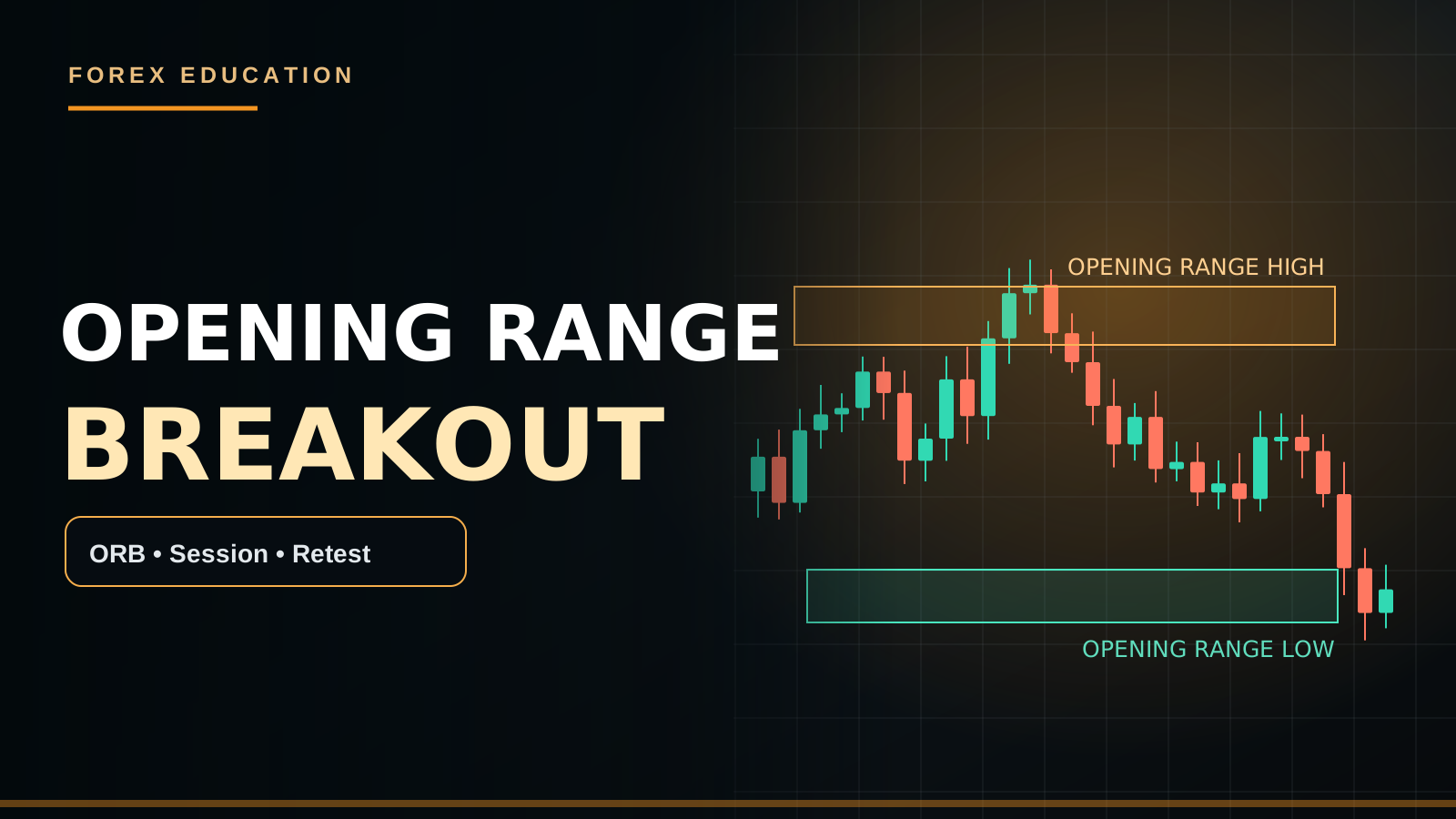
An Opening Range Breakout strategy defines a time window at the start of a trading session, marks its high/low and observes price crossing those boundaries. The precise start/end times matter because DST and broker clocks can shift the observed range.
PRACTICAL MARKET EXAMPLE
If London opening range is 1.1050–1.1080, a bullish break above 1.1080 could continue or become a sweep. An M5 close and retest can provide additional evidence.
IMPORTANT LIMITATIONS
Changing the opening window after seeing winners creates overfitting; fixed sessions are essential.
WHAT THE OPENING RANGE MEASURES
An Opening Range Breakout approach defines the high and low of a preselected time interval near the beginning of a trading session and watches for price to move outside that band. The method is common in exchange-traded markets but can be adapted to Forex sessions with clearly defined local observation windows. Its edge is not built into the clock. Results depend on instrument, chosen interval, trend environment, scheduled economic data, breakout confirmation and execution costs.
CHOOSE A REPRODUCIBLE WINDOW
A trader might study the first fifteen or thirty minutes of a defined London observation window, or another tested interval. What matters is keeping the start, end and timezone consistent. The London financial-center opening time shifts relative to Pakistan or Malaysia clocks when UK daylight saving changes. The US daylight-saving schedule is not identical. A permanent screenshot stating that London always begins at a fixed PKT time can be misleading. Use timezone-aware clocks and relevant market calendars.
ASIAN RANGE VERSUS LONDON OPENING RANGE
The Asian Session High and Low measure an earlier period, while the London Opening Range measures a selected window after European markets become active. They are not interchangeable. An ORB trader may use the Asian extremes as contextual liquidity references, but the breakout trigger itself should be tied to one precisely specified range. Mixing whichever boundary price broke successfully in hindsight can generate unrealistically good backtest results. Define all ranges before the live session starts.
HOW TO MARK ORB HIGH AND LOW
Observe the selected bars, record the maximum traded high and minimum low within the opening window and stop moving the boundaries after the window closes. Draw a horizontal upper and lower zone or lines, depending on spread and volatility. Record the time and chart timezone. The formation is not complete until the opening interval finishes. A breakout occurring during the range-building window should not be treated as a confirmed break of a range that has not yet been established.
A BULLISH ORB SETUP
If H4 EUR/USD bias is bullish and the London ORB High is broken by a completed M5/M15 candle, some traders study a continuation Buy. A retest that holds the former range high may provide additional price-action evidence. Place SL beyond a meaningful swing or a tested range-based boundary, then consider the nearest H1 Supply or previous-day high for a target. If the breakout candle is already extended and opposing resistance is close, the setup can be skipped.
A BEARISH ORB SETUP
GBP/USD may develop an ORB, then close beneath the selected range low during active London trading. A bearish H4 context and M5 lower high on retest might support a continuation Sell model. But a major UK data release or BoE comment can abruptly alter expectations and push price back above the range. A Sell Stop just beneath ORB Low may trigger on a short wick before the breakdown is confirmed. Understand order type, spread and slippage mechanics.
A NUMERICAL OPENING RANGE EXAMPLE
Suppose EUR/USD forms a thirty-minute London opening range with High 1.1050 and Low 1.1020, a thirty-pip span. Price later closes at 1.1058 and returns toward 1.1050. An M5 bullish confirmation after successful retest may give a candidate long. If stop below the retest low is fifteen pips away and a historical H1 resistance is only ten pips above, the setup has insufficient reward for many strategies. Range width alone does not dictate correct volume or target.
BREAKOUT WITHOUT RETEST
Some ORB moves break a boundary and continue strongly. A trader who requires a retest may miss them. This is not automatically an error, but a defined cost of a conservative entry method. Chasing a large candle after the fact can change the expected loss and reward. A direct breakout model that enters immediately has a different failure profile and may experience higher slippage. Both approaches require honest testing with consistent trigger and Stop rules.
FALSE ORB BREAKOUTS
Price can trade briefly above ORB High, trigger Buy Stops and then close back inside the range. It might next break the opposite side. Some strategies trade failed breaks after a completed reclaim and M5 CHoCH rather than continuation. But the failed-break model is a different hypothesis from ordinary ORB continuation and needs its own entry, invalidation and target. Not every brief wick is proof of intentional institutional manipulation.
ORB WIDTH AND VOLATILITY
If an opening range is extremely narrow relative to current spread, small fluctuations may cross its boundaries frequently without meaningful follow-through. An unusually wide range after a volatile announcement can require large stops and reduce attractive entries. Some traders filter ORB width using ATR or a specified percentage of recent daily movement. Such thresholds should be defined and tested, not chosen retroactively to preserve winning examples.
H4 TREND FILTER
An upside ORB break in an H4 uptrend may align with a continuation narrative. The same upside break in a strong H4 downtrend could be a countertrend rally toward Supply. Neither scenario is automatically invalid, but they are different strategy categories. Decide whether your system trades only aligned breaks or permits countertrend moves under stronger confirmation. If bias conflicts, standing aside is valid. Trade frequency should not override quality.
PREVIOUS DAY HIGH AND LOW
Previous Day High and Low may sit near the ORB boundaries, attracting breakout traders and protective stops. A London upside move that simultaneously sweeps Previous Day High might either continue or reject sharply. Observe whether the M15 candle holds beyond the reference and whether a meaningful Higher Low forms. Combining ORB with liquidity levels should not be interpreted as confirmed knowledge of global pending orders. These are observable market references.
LONDON NEW YORK OVERLAP
London and New York overlap can feature strong activity and important USD data. But different pairs respond differently to the session and upcoming economic releases. An ORB defined at the New York open is a different backtest from one based on the London open. Daylight-saving changes may shift their relative clocks throughout the year. A single permanent entry hour for all currencies and months is not reliable without correct timezone handling.
CPI NFP AND NEWS FILTER
US CPI and NFP often arrive during active US trading and can cause abrupt price repricing, two-sided whipsaws and wide spread. If a trader is using a New York ORB, the formation might overlap a scheduled release. Some strategies intentionally exclude such windows; others are designed specifically for news but face different risk. A low ORB width before news does not guarantee controlled Stop Loss execution afterward. State event filters before entry.
STOP LOSS AND LOT SIZE
An ORB strategy can use a stop beyond the opposite range edge, a retest swing or an ATR-derived buffer, but each method changes the trade. Do not combine whichever Stop looks best in hindsight. Calculate monetary exposure from actual price distance, pip/tick value and lot size. If the range is wide, reduce volume instead of using excessive leverage to preserve a desired fixed lot. Aggregate risk when several USD-correlated pairs break simultaneously.
A REALISTIC ORB JOURNAL
Record symbol, exact opening window and timezone, range High/Low, H4 structure, previous-day extremes, news events, breakout direction, first completed close, retest, entry fill, spread, Stop Distance and net R. Also record sessions when ORB stayed unbroken and correctly produced no trade. Compare aligned versus countertrend breaks and normal versus high-impact news periods. A few successful opening-session screenshots cannot establish repeatable profitability.
ORB FAQ
Does every London session produce a valid ORB breakout? No. Are Asian High/Low and London ORB the same? No. Does a Buy Stop wait for a completed candle? No. Can an upside breakout fail and turn bearish? Yes. Does DST affect PKT and Malaysian session conversions? Yes. Can a trading plan skip an entire session? Yes. No Confirmation = No Trade.
A RANGE THAT DOES NOT BREAK IS STILL USEFUL INFORMATION
An ORB framework should have a planned outcome for sessions when price never decisively leaves its opening band. Repeated wick tests followed by closes back inside may indicate noisy balance rather than a qualified continuation signal. No trade is a valid result. A trader who invents a late entry because the market did not offer a clear breakout is no longer following the tested ORB method. Include flat sessions in the journal so backtests represent actual opportunity frequency, not only days with spectacular moves.
HOW TO HANDLE STALE PENDING ORDERS
A Buy Stop left above the morning ORB may remain active long after the original London setup expired, even when a new US data release changes the context. Define the maximum valid time for each order and cancel or reassess it when conditions expire. A confirmed candle strategy may be better implemented with an alert followed by review than a first-touch pending order. The execution workflow must match the exact condition under which the trade idea is valid.
PIPSEPAISA FREE COURSES
For structured technical analysis education, explore the Free Forex Technical Analysis Course with Sir Sajid Khan Ghori. To understand the economic context behind Forex and Gold, explore the Free Forex Fundamental Analysis Course with Sir Ghulam Abbas. Visit www.pipsepaisa.com and select Courses for enrollment instructions. Courses and trading content cannot guarantee profit.
RISK DISCLAIMER
This is for education only. No indicator, chart pattern or economic release guarantees a trading outcome. Always calculate potential account loss, consider spreads and slippage, and wait for completed confirmation before trading.
Read in Roman Urdu
INTRODUCTION
Opening Range Breakout (ORB) mein Session Start ka defined Time Window High/Low mark hota hai. Exact Session Start/End, DST aur Broker Clock differences Range Levels ko change kar sakti hain.
PRACTICAL EXAMPLE
London Range 1.1050–1.1080 ho aur Price 1.1080 ke upar Break de to Continuation ya Sweep dono possible. M5 Close/Retest observe karein.
LIMITATIONS
Winners dekh kar ORB Window adjust karna Overfitting hai; fixed Timezone aur Window zaroori.
OPENING RANGE BREAKOUT KYA HAI?
ORB Strategy Trading Session ke Selected Starting Time Window ka Highest High aur Lowest Low mark karti hai. Window complete hone ke baad Price Upper/Lower Boundary cross karti hai ya nahi, observe hota hai. Ye Concept Stocks/Futures mein bhi use hota hai aur Forex London/New York sessions par adapt kiya ja sakta hai. Lekin Clock Time itself guaranteed Profit Edge nahi. Instrument, H4 Structure, News, Spread aur Confirmation Rule important hain.
EXACT TIME WINDOW FIX KAREIN
London Opening ke first 15 ya 30 minutes ya kisi separately tested interval ka High/Low mark kar sakte hain. Timezone aur Start/End consistent hon. UK DST change se London Opening Pakistan/Malaysia Clock ke relation mein shift ho sakti hai. US DST different dates par change hoti hai. Purane graphic mein fixed 'London Start X PKT' har month correct hona zaroori nahi. Timezone-aware Session Clock aur Economic Calendar verify karein.
ASIAN RANGE VS LONDON ORB
Asian High/Low previous Session Window ke Levels hain. London ORB European Activity ki first selected Minutes ki Range hai. Dono related context provide kar sakte hain lekin same nahi. ORB Entry ko exactly defined London/NY Range ke mutabiq test karein. Winning Historical Chart dekh kar Asian High ya London High mein se jo best match ho use select karna Hindsight Bias hai. Range Definitions aur Trigger Level pehle select karein.
ORB HIGH LOW MARK KAISE?
Chosen Opening Window start hone par Candles observe karein. Window ke andar maximum High aur minimum Low note karein. Window complete hone se pehle final ORB boundaries declare na karein. Window ke end par fixed Horizontal Lines/Zone mark karein. Uske baad Boundary move na karein, even if next Candle breakout ya reversal de. Chart Timezone aur actual session cutoff journal mein save karein. Pending Orders exact Level se related hon to Broker Spread/Points bhi check karein.
BULLISH ORB STRATEGY
EUR/USD H4 Bullish hai aur London ORB High ke upar M5/M15 completed Candle Close deti hai. Price old High ko Retest kar ke hold kare aur M5 Higher Low/Bullish Engulfing confirm ho to possible Buy Continuation. SL actual Retest Low ya tested ORB Stop Method ke mutabiq. TP previous H1 Resistance ya Previous Day High. Agar Breakout Candle already huge aur nearest Supply close hai to Risk/Reward poor aur No Trade possible.
BEARISH ORB STRATEGY
GBP/USD H4 Downtrend mein London ORB Low ke neeche completed Bearish Close de. M5 Lower High aur Lower Boundary Retest reject kare to possible Sell. Lekin UK Employment/BoE News Pound ko rapidly reverse bhi kar sakti hai. ORB Low ke neeche Sell Stop temporary Wick par fill ho sakti hai, while full close missing. Buy/Sell Stop trigger aur actual M5 Confirmation different mechanisms hain. Strategy ka Order Type clear karein.
EUR/USD NUMERICAL EXAMPLE
London first 30-Minute Opening Range High 1.1050 aur Low 1.1020 ho, Width 30 Pips. Price 1.1058 close kare, phir 1.1050 Retest de aur M5 Bullish Confirmation aaye. Possible Buy Scenario hai. Lekin Stop Retest Low ke neeche 15 Pips aur Next H1 Resistance Entry se 10 Pips upar ho to planned RR weak. Range High Break hone ka matlab every trade financially sensible nahi. Lot Dollar Risk aur actual SL ke mutabiq.
DIRECT BREAKOUT WITHOUT RETEST
Kuch ORB Breakouts Old Range Level par return nahi karti aur direct strong move continue karti hain. Conservative Retest Trader un Opportunities ko miss karega. Ye necessarily mistake nahi, uske Rules ka expected Tradeoff hai. Huge Candle chase karna New Entry Strategy hai jiska Stop/Target geometry change ho chuka hota hai. Direct Breakout Model more frequency aur Slippage Risks carry kar sakta hai. Dono Models honest Backtest mein compare karein.
FALSE ORB BREAKOUT
Price ORB High ke upar Wick de, Buy Stops trigger hon, phir Candle Range mein close ho aur opposite side downward move de. Ye Failed Break Model ho sakta hai. Lekin each High Sweep intentional Institutional Stop Hunt prove nahi. Full Candle Range Reclaim aur M5 Bearish CHoCH se Conditional Sell evaluate ho sakti hai. Normal ORB Continuation Strategy aur Failed Breakout Strategy alag Rules/Results rakhti hain.
ORB RANGE WIDTH
Bohat narrow ORB Spread ke muqablay tiny ho to Price repeatedly boundaries cross kar sakti hai. Bohat wide ORB News Move ke baad banay to Stop Distance large aur RR unattractive. Kuch Systems ATR ya recent Volatility ke mutabiq Range Width Filter use karti hain. Lekin Threshold predefine aur backtest hon, winners dekh kar change na karein. Range Width Trading Opportunity ke quality ka one factor hai, guaranteed signal nahi.
H4 DIRECTION FILTER
H4 Uptrend ke saath ORB Bullish Break possible Continuation hai. H4 Downtrend mein same Bullish Break Countertrend Rally bhi ho sakti hai. Dono Trade Categories different hain. Agar Strategy only H4-aligned entries allow karti hai to Countertrend ORB Skip karein. M5 Bullish Candle H4 Direction automatically change nahi karti. Trade Frequency se zyada Setup Consistency important hai.
PREVIOUS DAY HIGH LOW
Previous Day High/Low ORB Boundary ke qareeb ho sakte hain. Breakout Buy Stops aur existing Sellers ke protective Orders wahan possible hain. Price High sweep kar ke Reject ya Continue kar sakti hai. M15 Full Close, Retest aur M5 Higher Low important. Liquidity Area ka Label exact global Stop Orders ka proof nahi. Level ko observation reference samjhein.
LONDON NEW YORK OVERLAP
London/New York overlap mein participation aur movement increase ho sakti hai, lekin Instrument aur Economic Events par depend. New York ORB aur London ORB different Trading Setups hain, exact same Win Rate assume na karein. US/UK DST se PKT/Malaysia relative hours shift hoti hain. Consistent Timezone-aware Windows aur Broker Candle Cutoffs use karein. Har month static Opening Clock screenshot reliable nahi.
CPI NFP NEWS FILTER
US CPI aur NFP often New York active hours mein strong Price Repricing cause karte hain. Agar ORB Window Release ke aas paas hai to Two-Sided Whipsaw, Spread Widen aur SL Slippage possible. Kuch Strategies High Impact News Window exclude karti hain. News-specific Trading Model separate higher risk le sakta hai. Low ORB Volatility before Release Stop safe hone ki guarantee nahi. Economic Calendar check karein.
STOP LOSS AND LOT
ORB opposite Range Edge, Retest Swing ya ATR Buffer three different Stop Methods ho sakte hain. Historical Winners ke according best Stop selectively choose na karein. Actual Price Distance se Dollar Risk aur Lot calculate karein. Gold Contract aur EUR/USD Pip Value different. Wide Range par Volume kam karein, desired lot maintain karne ke liye huge Leverage na use karein. Correlated USD Breakouts ka combined Risk evaluate karein.
ORB TRADING JOURNAL
Symbol, Date, Local Timezone, Opening Range High/Low, H4 Bias, Asian/Previous Day Levels, News, Completed Breakout Candle, Retest, Actual Fill, Spread, SL, TP aur Net R record karein. Jo Session Range Break nahi deti usay bhi No Entry category mein rakhein. With-Trend, Countertrend aur News Days ke Results separately compare karein. Beautiful London Breakouts ki selected screenshots sufficient statistical evidence nahi.
FAQ
Har Session ORB valid? Nahi. Asian Range = ORB? Nahi. Buy Stop Candle Close wait? Nahi. False Upside Break possible? Haan. DST Session Conversion affect? Haan. Full Session No Trade? Haan. No Confirmation = No Trade.
RANGE BREAK NA HO TO KYA?
Kuch Days London/New York Opening Range complete hoti hai magar Price clearly Upper ya Lower Boundary break nahi karti. Repeated Wicks Range ke andar return kar sakti hain. Ye No Trade Session ek valid system outcome hai. Sirf Daily Profit Target complete karna hai is liye late random Market Order lena ORB strategy nahi. Trading Journal mein no-breakout days bhi record karein. Is se actual Setup Frequency aur expected performance ka better idea milta hai. Every Session must trade, ye assumption inaccurate hai.
PENDING ORDER EXPIRY
London ORB High ke upar Buy Stop morning se active hai. Hours baad US News release hoti hai aur same old Pending Order unexpectedly fill ho sakti hai. Original London Market Context change ho chuka hota hai. Is liye Pending Order ke liye Valid Time Window aur Expiry Rule define karein. M5 Complete Close wali Strategy ko first-touch Buy Stop se execute karna confirmation violation ho sakta hai. Price Alert aur actual Candle Review safer discipline de sakta hai, although guaranteed Profit nahi.
ORB LOT SIZE EXAMPLE
EUR/USD ORB High 1.1050, Low 1.1020 aur Buy Entry 1.1055 ho. Agar chosen stop 1.1020 hai to 35 Pips initial downside before spread. $1,000 Equity par illustrative Risk 0.5% = $5 ho to Required Pip Value $5/35 ≈ $0.143. Typical USD EUR/USD Volume around 0.0143 Lot theoretical hai, lekin Broker 0.01 Step allow kare to smaller 0.01 possible. Agar Broker Minimum exceeds risk budget to Trade Skip. Lot Size Range Width se directly linked ho sakti hai.
ORB MONTHLY REVIEW
London ORB vs New York ORB ko separate analyze karein. Date, Timezone, DST Month, Range Width, H4 Trend, Spread, CPI/NFP proximity, Completed Breakout, Retest, SL/TP aur Net Result record karein. Kya Asian Range ke High/Low ke qareeb False Breakouts more frequent hain? Kya News Days mein Slippage average high? Kya Retest Entries fewer but better Average R deti hain? Fixed Data aur Consistent Rules se answers nikalein, guess na karein.
PIPSEPAISA FREE COURSES
Sir Sajid Khan Ghori ke Free Forex Technical Analysis Course mein Price Action, Market Structure aur Confirmation seekhein. Sir Ghulam Abbas ke Free Forex Fundamental Analysis Course mein Gold aur Forex ke Economic Data ka concept samjhein. www.pipsepaisa.com par Courses Tab se Enrollment Instructions check karein. Course Profit ki guarantee nahi.
DISCLAIMER
Ye sirf educational content hai. Koi Indicator, Pattern ya News guaranteed signal nahi. Structural Stop Loss, Account Risk, Spread aur Completed M5 Confirmation ka wait karein. No Confirmation = No Trade.
Educational content only. Trading involves risk. Always use independent analysis and appropriate risk management.