
ICT Kill Zones Explained: London Open, New York Session, Liquidity and M5 Confirmation
PipSePaisa • Forex Education & Research
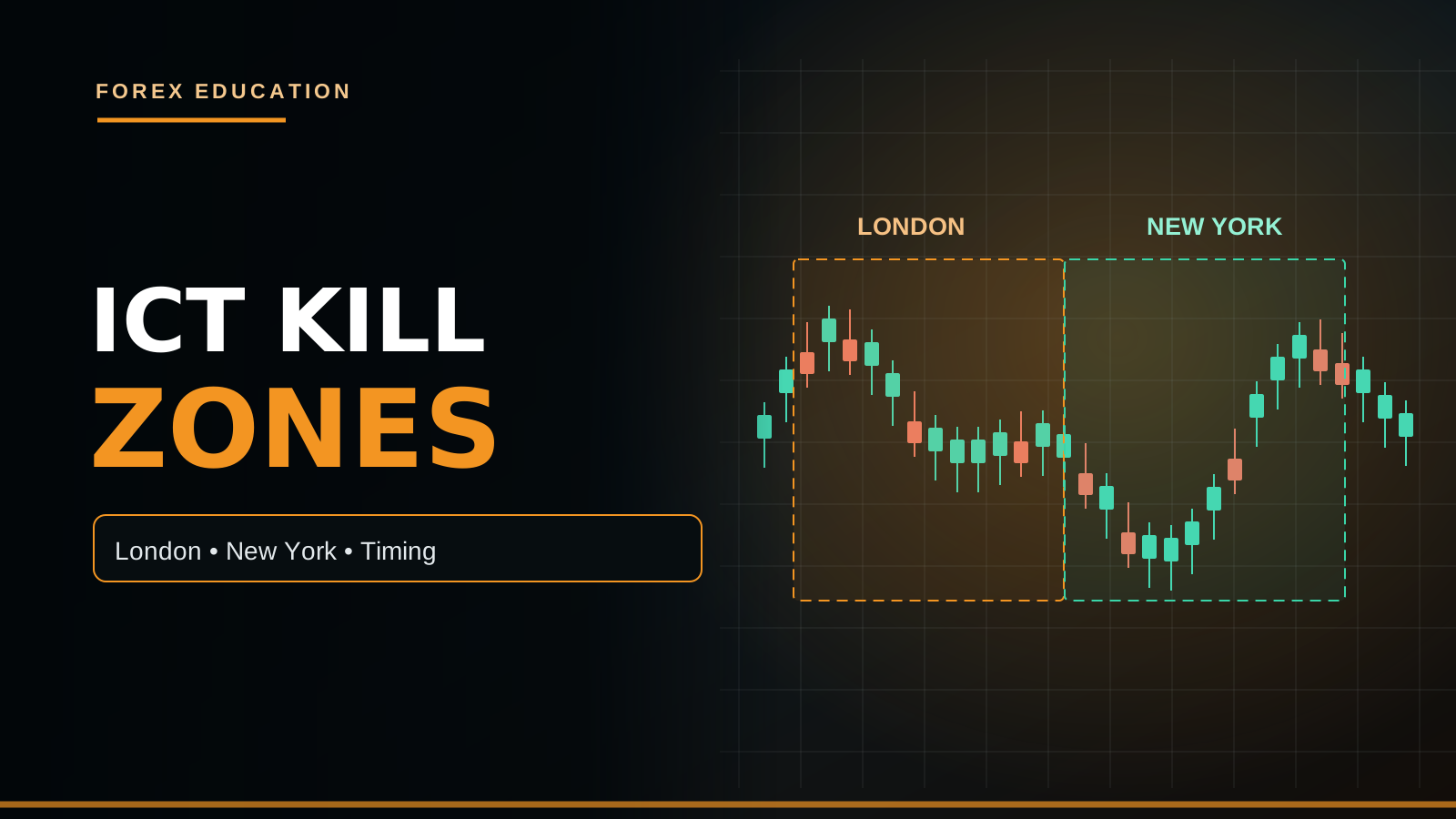
WHAT ARE ICT KILL ZONES?
ICT Kill Zones are time windows discussed within the Inner Circle Trader style of technical analysis. They are used to focus attention on particular periods of the Forex trading day, especially around London and New York activity. Traders sometimes combine these windows with liquidity sweeps, market-structure shifts and Fair Value Gaps. A Kill Zone is a timing framework, not an exchange-guaranteed interval in which the price must reverse or deliver profit. Session participation and volatility differ from one day to the next.
HOW KILL ZONES DIFFER FROM MARKET SESSIONS
A Forex market session describes broad trading activity associated with Asian, European or American business hours. A Kill Zone is a narrower window selected by a methodology inside or around those sessions. London session hours and the specific ICT London Open Kill Zone should not be conflated. Similarly, all New York trading hours are not one identical Kill Zone. A trading journal should document the exact clock interval used by a strategy, not rely on whichever interval made a past trade look successful.
NEW YORK LOCAL TIME CONVENTIONS
Many ICT tutorials express Kill Zone windows in New York local time, while some refer to an eastern time notation such as EST. This creates ambiguity because New York observes daylight-saving time for part of the year. A fixed EST offset is not identical to New York civil time throughout summer. Rather than promising one permanent Malaysia or Pakistan conversion, check the actual tutorial's time convention, New York date and daylight-saving status. A timezone mistake can invalidate an otherwise carefully designed session backtest.
LONDON OPEN KILL ZONE
A commonly discussed ICT London Open window is approximately 2:00 a.m. to 5:00 a.m. New York time, depending on the specific instructional variant. This is an example convention, not a universal legal trading-session definition. Different educators may use slightly different windows. London financial-center opening itself also shifts relative to New York for short periods when UK and US daylight-saving dates differ. Verify live timezone conversions and test one precise interval rather than mixing multiple definitions.
NEW YORK MORNING KILL ZONE
Some ICT educational materials focus on a New York morning window such as 7:00 a.m. to 10:00 a.m. New York time, again depending on the methodology. Important US data releases may occur during or near the selected period. Market participation and volatility can increase around these events, but this does not imply price must deliver an easy directional trade. If your tested strategy avoids CPI, NFP or FOMC headlines, that exclusion still applies even when the release falls inside a preferred Kill Zone.
OTHER ICT TIME WINDOWS
Asian-session ranges and afternoon New York windows are also mentioned in ICT-style discussions. However, naming every session movement a separate special Kill Zone makes the framework unfalsifiable. Fix which exact window is being tested, why it is relevant to the symbol and what confirmation is required. A Forex major pair's liquid hours may differ from an index future or retail Gold CFD's most active window. Trading times are one variable in a system, not an independent probability-of-profit measurement.
THE ASIAN RANGE AS CONTEXT
Many intraday traders mark a prior Asian-session high and low before London activity. Price may break above or below the range during more active hours. Some strategies seek continuation after a confirmed break; others monitor a failed breakout or liquidity sweep. Neither outcome is guaranteed. The session range should be defined using precise start/end times and broker data. Marking whichever two pivots best match the profitable reversal after it happens introduces hindsight bias.
BUY-SIDE LIQUIDITY SWEEPS
A buy-side liquidity sweep is often described when price briefly trades above a visible prior high, triggering some orders, before rejecting back below. This is an interpretive price-action concept, not direct proof that a particular institution hunted retail Stop Losses. During a London or New York Kill Zone, traders may monitor equal highs and previous-day highs for such reactions. A sweep alone does not complete a Sell setup. The market can accept prices above the high and continue bullish.
SELL-SIDE LIQUIDITY SWEEPS
A sell-side sweep is a possible brief penetration beneath equal lows, previous-day lows or recognized Support followed by a reclaim. Some traders regard it as a candidate bullish reaction when the higher-timeframe context supports Demand. But a temporary lower wick can become a full bearish breakdown if strong selling persists. Require the actual method's completed reclaim, market-structure shift or engulfing confirmation. Stop Loss belongs beyond a meaningful invalidation level, not exactly where everyone expects a guaranteed reversal.
CHoCH AND MARKET STRUCTURE SHIFT
Change of Character or Market Structure Shift often refers to a meaningful break in the short-term sequence of highs and lows. A bearish shift could involve a lower high and break below an important internal swing low; a bullish shift the opposite. However, different SMC/ICT teachers define which swings matter differently. Write the precise rule for the selected timeframe rather than interpreting any tiny M1 break as a major H1 reversal. Completed M5 or M15 closes can improve clarity at the cost of entering later.
FAIR VALUE GAP CONTEXT
A Fair Value Gap, or FVG, is commonly drawn in some ICT methods as a gap between the first and third candle's price ranges in a three-candle structure, leaving an intervening imbalance area. Traders may watch whether price later revisits it. Such a zone is an observed chart feature; it does not guarantee that large institutions must fill every imbalance. A FVG inside a Kill Zone can fail or remain unfilled. Combine location, H4/H1 context and a documented entry trigger instead of treating any gap as an automatic Buy Limit.
ORDER BLOCKS AND SESSION TIMING
An Order Block in SMC terminology usually marks a selected origin candle or area preceding a meaningful displacement or structural break. Definitions vary. A trader might combine an H1 Order Block with a specific London or New York observation window, but two labels do not ensure success. If Price reaches the zone outside the permitted session and the model only trades within its Kill Zone, the opportunity is skipped. Entry discipline and a defined invalidation point are more valuable than adding labels after each move.
A LONDON EUR/USD BUY EXAMPLE
Suppose EUR/USD H4 has higher highs and higher lows and H1 Demand lies beneath the Asian range. During the chosen London observation window, price briefly moves below the prior Asian low, closes back above and then M5 breaks a meaningful local lower high. A bullish engulfing confirms the shift in the trader's written model. A Buy may be considered with Stop beyond the sweep low and target near prior H1 Resistance. This is a conditional illustration, not a current EUR/USD signal.
A NEW YORK GOLD SELL EXAMPLE
Imagine XAUUSD rallies toward a previously marked H4 Supply Zone as New York activity begins. Price briefly trades above the previous-day high but then closes below it. An M5 lower high and a completed bearish structure shift could support a conditional Sell setup, provided the stop beyond the sweep high and target near H1 Demand offer reasonable R:R. If US data is imminent, the strategy's news filter may prohibit entry. A Kill Zone label does not neutralize real yields, DXY or slippage risk.
A FAILED KILL ZONE SETUP
A London sell-side sweep may be followed by a small bullish engulfing that appears to qualify. If the next completed M5 candles fail to hold above the reclaimed level and H1 Demand breaks decisively, the bullish scenario may be invalidated. The system should predefine when an unfilled setup expires and when a filled trade exits. Do not widen the Stop Loss because the price movement occurred during a famous Kill Zone. A time label is not evidence that the market owes the trader a reversal.
TIME WINDOW AND DAYLIGHT-SAVING BACKTESTS
A historical Kill Zone test can be distorted when the chart's broker-server timestamps are converted using the wrong timezone or a permanent UTC offset. New York and London do not change clocks on the same dates, which can briefly alter session overlap patterns. Define whether the intended window follows New York civil time, fixed EST or London local time. Convert every historical date correctly, then check whether the backtest still works. Mixing conventions can shift signals by an hour or more.
THE OVERLAP AND ECONOMIC EVENTS
The London-New York overlap may contain elevated participation in major USD currency pairs. However, some important US releases can cause extreme short-term volatility, making stops difficult to execute. A market can move far during the first news impulse and then reverse when traders process revisions or central-bank statements. If a model requires an H1 zone plus a complete M5 rejection after the release, it may miss some moves. Missing unconfirmed moves is a normal cost of disciplined strategy selection.
SPREAD, STOP LOSS AND LOT SIZE
During busy periods, spreads may sometimes narrow, but around news they can widen sharply. A setup with twenty pips to a structural Stop may have an actual cost different from the chart's idealized entry. Calculate Lot Size using the broker's current contract and acceptable equity risk; never increase it because the setup is labeled an ICT New York Kill Zone. Use the nearest H1 opposing level to estimate target room. A beautifully timed M5 signal may still be financially unattractive.
JOURNALING SESSION SETUPS
Record symbol, exact New York/local session start, daylight-saving convention, Asian range, previous-day extremes, H4 bias, H1 zone, M5 trigger and whether the close actually completed inside the permitted window. Add spread, planned versus actual fill, Stop, target and result in R. Include sessions where a sweep happened without structure confirmation and sessions where no sweep occurred. Compare London and New York windows separately. This helps separate the effect of timing from the effect of chart location and market regime.
COMMON KILL ZONE MISTAKES
Common mistakes include using the wrong timezone, treating an entire session as one fixed Kill Zone, buying every sell-side sweep without confirmation, confusing a forming M5 candle with a completed signal, ignoring high-impact data and treating the framework as proof of institutional manipulation. Another error is moving the window boundaries after examining winning historical trades. A timing tool is useful only when rules are consistent, measurable and compatible with account risk. No session guarantees profitability.
KILL ZONE FAQ
Does the London Kill Zone guarantee a trend? No. Are the exact time windows standardized across every ICT teacher? No. Does daylight saving affect local-time conversion? Yes, depending on the convention. Can a liquidity sweep continue rather than reverse? Yes. Is a Fair Value Gap inside a Kill Zone guaranteed to fill? No. Can a trader skip a major news release even during a preferred window? Yes. Combine the clock with price location, completed confirmation and realistic risk.
PIPSEPAISA FREE COURSES
Explore Free Forex Technical Analysis with Sir Sajid Khan Ghori and Free Forex Fundamental Analysis with Sir Ghulam Abbas through www.pipsepaisa.com Courses. This article describes trading concepts for educational purposes, not personalized investment advice. Leveraged Forex and Gold trading involves significant risk.
Read in Roman Urdu
ICT KILL ZONE KYA HAI?
ICT Kill Zones ek Timing Concept hai jo Inner Circle Trader style Price Action Framework mein commonly discuss hota hai. Traders London/New York ki selected Clock Windows mein possible Liquidity Sweeps, CHoCH aur Fair Value Gap setups observe karte hain. Lekin Kill Zone ka matlab guaranteed Money-Making Hour nahi. Market har day same Pattern nahi banati. Session Activity, Economic News aur H4 Trend matter. Zone sirf when-to-watch idea hai, Buy/Sell Confirmation ka substitute nahi.
SESSION VS KILL ZONE
London Session ka broad Market Business Hours period aur ICT London Open Kill Zone ek exact same term nahi. Kill Zone usually narrower observation window hoti hai. New York Session entire day active reh sakti hai lekin NY Kill Zone selected Hours define karti hai. Chart dekh kar winning Candle kisi bhi hour mein mile aur baad mein Kill Zone label kar dena biased. Exact Strategy Clock Window pehle define karein. TradingView Timezone aur Broker Server Time verify karein.
NEW YORK TIMEZONE ISSUE
ICT Tutorials aksar New York Local Time use karti hain, kuch jagah EST notation. New York Daylight Saving observe karta hai, isliye New York Local Clock aur Fixed EST Offset summer mein same nahi. Malaysia GMT+8 aur Pakistan GMT+5 ke conversions Season ke mutabiq change ho sakte hain if New York civil time intended. Kisi old Video ka fixed PKT Start Time har month correct na assume karein. Date aur exact time convention note karein.
LONDON OPEN KILL ZONE TIMING
Some ICT Methods London Open Kill Zone approximately 2 AM se 5 AM New York Time describe karti hain, lekin Instructor variant ke rules check karein. Ye Exchange Official Fixed Profit Window nahi. UK aur US DST Change Dates different hone se London Actual Local Opening New York Clock ke relation mein temporary shift ho sakta hai. Same Calendar Time conversion year-round assume na karein. Session Timer with correct Date/Timezone use karein. H4/H1 Setup ke bina Clock Window alone Trade nahi.
NEW YORK MORNING WINDOW
ICT Trading Community New York Morning Kill Zone often 7 AM se 10 AM New York Time discuss karti hai, depending on chosen rules. US News jaise NFP/CPI selected window ke andar ya qareeb aa sakti hain. High Volatility se Opportunity ke saath Slippage, Fakeouts aur Huge Stop Risk bhi. Kill Zone news safety guarantee nahi. Agar Strategy No High Impact News Trade demand karti hai to Time Window ke naam par exception mat karein.
OTHER KILL ZONE WINDOWS
ICT Discussions mein Asian Range, London Open, NY Morning aur NY Afternoon jaisi windows mention hoti hain. Lekin every winning Candle ko after-the-fact special Window label karna realistic Backtest nahi. Exact Time Boundary, Instrument aur Trigger rule fix karein. EUR/USD aur XAUUSD ki Liquidity patterns alag ho sakti hain. Gold Futures aur Retail CFD Session bhi identical nahi. Time Window good Entry Location aur M5 Confirmation ke bina enough nahi.
ASIAN RANGE LEVELS
London Session se pehle Asian Session High/Low mark karna common intraday method hai. London active period mein Price Range High ya Low Break kar sakti hai. Genuine Breakout continuation bhi aur Failed Sweep Reversal bhi possible. Asian Time Window exact define karein; broker H1 Candles aur Local Timezone same hon. Winning Chart ke result dekh kar range ki start/end arbitrarily change na karein. Previous Day High/Low also context provide kar sakte hain.
BUY SIDE SWEEP
Equal Highs/Previous Day High ke upar Price temporary move kar ke back below Close ho to Buy-Side Liquidity Sweep ka possible label diya jata hai. Lekin Exact Global Stops hit hone ya Bank Intent Footprint Chart without data verify nahi. ICT London/NY Window mein Sweep relevant ho sakti hai but Sell automatically nahi. Agar Price High ke above Full H1 Close aur successful Retest kare to Genuine Continuation bhi possible. M5 Bearish CHoCH complete ho tab strategy evaluate karein.
SELL SIDE SWEEP
Equal Lows/Previous Day Low ke neeche temporary Wick aur Range Reclaim possible Sell-Side Sweep hai. H1 Demand aur H4 Bullish Bias ke sath possible Buy interest observe ho sakta hai. Lekin Liquidity Sweep ke baad price lower continue bhi kar sakti hai. M5 Completed Bullish CHoCH, Engulfing aur Relevant Higher Low check karein. Structural SL actual Sweep Low ke beyond. Stop Distance aur Lot calculate karein. No Confirmation = No Trade.
CHoCH MSS CONFIRMATION
CHoCH/Market Structure Shift M5 ya M15 Swing High/Low Sequence ki meaningful change indicate kar sakti hai. Bearish Shift mein lower high aur relevant Swing Low Break, Bullish mein higher low aur Local Swing High Break. Different Mentors Internal/External Swings differently define karte hain. Har tiny M1 Wick ko H1 major reversal na samjhein. Full Candle Close required hai to forming Candle par Entry not valid. Late Confirmation ka actual RR calculate karein.
FVG FAIR VALUE GAP
ICT Method mein FVG often three-candle Formation ke First/Third Candle Price Range ke gap se define hoti hai. Traders potential Imbalance Reaction Zone mark karte hain. Lekin every FVG future fill compulsory nahi aur institutional order guaranteed nahi. Kill Zone ke andar FVG appear ho to H4 Trend, H1 Demand/Supply aur M5 Confirmation required according strategy. Blind Limit Order at every FVG many false entries create kar sakti hai. Strong trend mein Price FVG revisit nahi bhi karti.
ORDER BLOCK WITH KILL ZONE
H1 Order Block previous Origin Candle ya reaction area ka selected SMC Label ho sakta hai. Different Teachers exact OB Criteria different rakhte hain. OB + London Kill Zone automatically A++ guaranteed winner nahi. Agar Price Zone par selected Time Window ke bahar aaye aur System only Kill Zone trade karta hai to No Trade. M5 CHoCH aur Price Retest rules follow karein. H1 Opposing Supply Target aur Stop beyond Zone realistically assess karein.
LONDON EUR/USD BUY EXAMPLE
EUR/USD H4 Bullish HH/HL aur H1 Demand Asian Low ke qareeb hai. Selected London Kill Zone ke andar Price Asian Low Sweep kar ke Range Reclaim kare. M5 Completed Bullish CHoCH ya Engulfing local Lower High ke upar close ho. Buy Candidate possible, SL Sweep Low ke beyond aur TP prior H1 Supply. Agar Price already huge Candle move kar chuki aur Reward Room small ho to no entry. Ye hypothetical setup hai, live signal nahi.
NEW YORK GOLD SELL EXAMPLE
Gold H4 Supply ke qareeb Rally kar rahi hai aur NY selected Kill Zone start hoti hai. Price Previous Day High ke upar Wick de kar below Close. M5 Lower High aur Bearish CHoCH complete ho to possible Sell. SL actual Sweep High ke beyond aur TP H1 Demand. Lekin CPI/FOMC News imminent ho to No-News filter trade prohibit kar sakti hai. Gold Real Yields aur DXY Reaction bullish bhi ho sakti hai. Timing alone direction guarantee nahi.
FAILED KILL ZONE SETUP
London Sell-Side Sweep ke baad M5 Bullish Engulfing ban sakti hai, magar next Candles Reclaimed Level hold na karein aur H1 Demand breakdown de. Original Bullish Thesis weak/invalid ho sakti hai. Stop Loss widen na karein just because Kill Zone strong expected thi. Unfilled Entry Setup ki Expiry Time predefine karein. Filled Trade structural SL ke according exit. Market famous Clock Window ki wajah se trader ko guaranteed Bounce nahi deti.
DST BACKTEST ACCURACY
Historical ICT London/NY Windows calculate karte waqt fixed UTC Offset use karna months mein incorrect ho sakta hai. New York aur London Daylight Saving different Dates par change karti hain. Strategy New York Civil Time follow karti hai, fixed EST ya London Local Time? Ye pehle define karein. Historical Dates per exact Conversion apply karein. Broker Server Daily Candle Time bhi. Time Mistake se M5 Entry wrongly qualifying report ho sakti hai. Replay correct timestamps par karein.
OVERLAP NEWS CONDITIONS
London-New York overlap mein EUR/USD aur Gold Activity increase possible, lekin NFP/CPI Releases sudden Whipsaw aur Spread Widen create kar sakti hain. Market initial M1 direction reverse kare to Early Entry risk high. H1 Zone + completed M5 Retest Rules use karein. Kuch News Moves Wait ki wajah se miss hongi, lekin ye strategy ka defined Tradeoff hai. Har News First Green Candle Buy aur Red Candle Sell karna Kill Zone Trading nahi.
RISK MONEY MANAGEMENT
Active Session mein Spread sometimes tighter ho sakti hai, magar News par widen. M5 Bullish CHoCH ke baad structural SL 20 Pips ho aur Nearest Supply 10 Pips ho to RR poor. Broker EUR/USD Pip Value ya Gold Contract Size se Lot calculate karein. ICT Kill Zone ki wajah se normal Account Risk Double na karein. Slip/Wick risk realistic include. Minimum Lot allowed risk exceed kare to No Trade. Timing Capital Protection ka substitute nahi.
KILL ZONE JOURNAL
Symbol, Date, NY Timezone/DST, London/NY Window Start-End, Asian High/Low, H4 Direction, H1 Supply/Demand, M5 Confirmation Time, Entry, SL, TP, Spread aur Net R log karein. Price Sweep ho magar CHoCH missing, No Trade. No Sweep Window bhi record. London vs NY Strategies performance separate compare karein. Extra Economic News Filters ka impact measure karein. Winning Screenshots only select kar ke Clock Magic Results claim na karein.
COMMON ICT ERRORS
Wrong PKT/Malaysia Time Conversion, Entire London Session ko same Kill Zone, every Equal Low Sweep par Buy, M5 Open Candle par Early Entry, CPI/NFP Spread ignore, H1 Supply/Demand not marked, Winning Charts ke baad Clock Boundaries adjust. Every Sweep institutional planned Stop Hunt proof nahi. ICT Timing Methods ko objective rules aur Risk Controls ke saath use karein. Trade Entry tabhi jab proper full confirmation mile. No Confirmation = No Trade.
ICT KILL ZONE FAQ
London Kill Zone guaranteed Trend? Nahi. All Educators exact timing same? Nahi. DST conversion affect? Haan. Sweep always reverse? Nahi. FVG guaranteed fill? Nahi. NFP ke waqt Kill Zone trade compulsory? Nahi. Best process H4 Context → H1 Zone → Correct Timezone → Possible Liquidity Sweep → M5 Completed CHoCH/Engulfing → SL/Lot/TP. Confirmation incomplete ho to wait. No Confirmation = No Trade.
PIPSEPAISA FREE COURSES
Sir Sajid Khan Ghori ka Free Forex Technical Analysis Course aur Sir Ghulam Abbas ka Free Forex Fundamental Analysis Course www.pipsepaisa.com ke Courses section se check karein. Ye educational article hai, Financial Advice nahi. Leveraged Trading mein loss ka significant risk hai.
Educational content only. Trading involves risk. Always use independent analysis and appropriate risk management.