
Stop Loss and Take Profit in Forex: Logical Placement and Execution
PipSePaisa • Forex Education & Research
INTRODUCTION
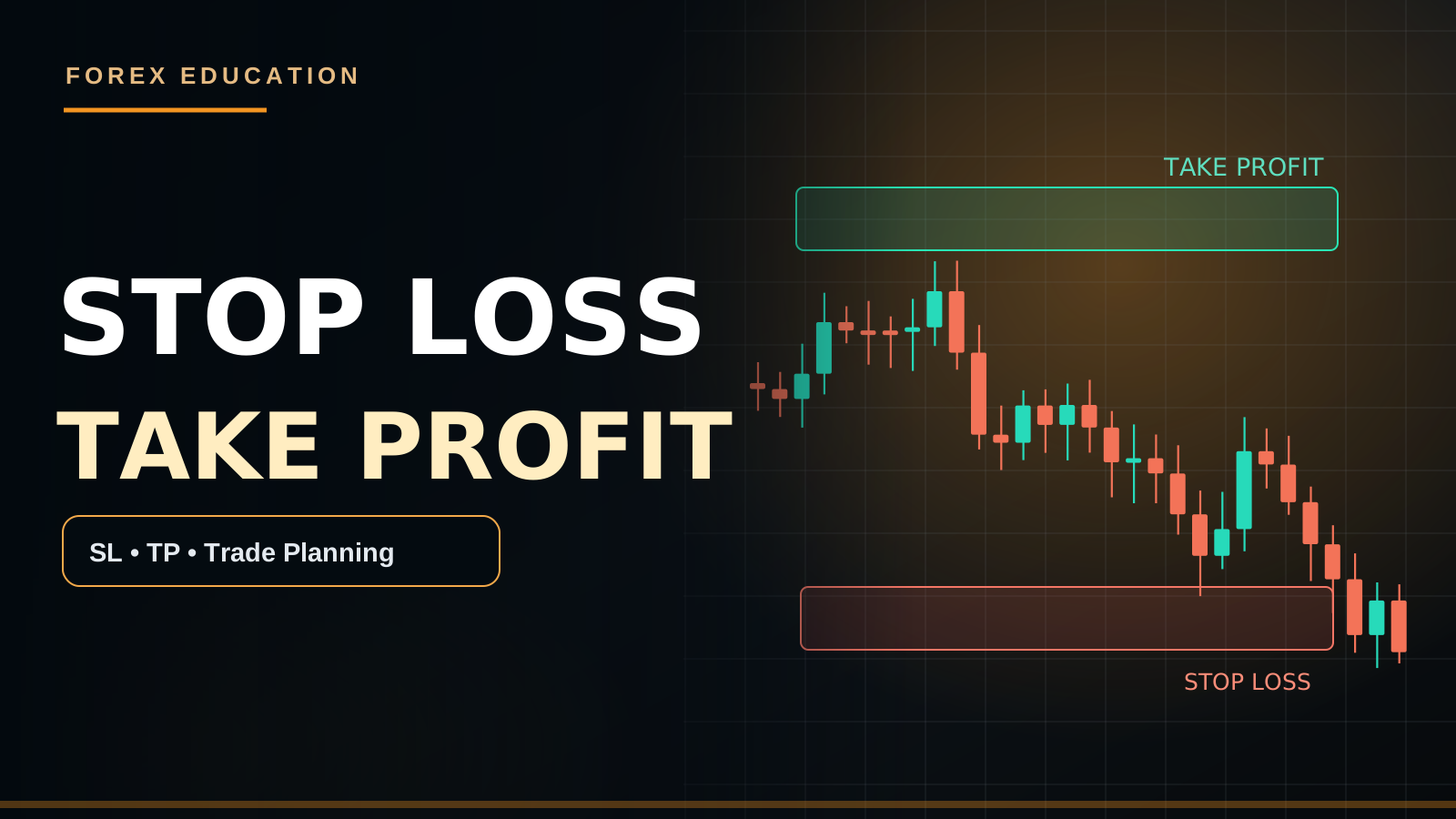
A Stop Loss (SL) is an instruction designed to limit downside when price reaches a specified trigger. A Take Profit (TP) is an exit instruction for a desired target. Neither removes uncertainty: execution prices can differ from triggers during gaps, slippage or sharp volatility.
1. WHERE A STOP BELONGS
Identify what would prove your setup wrong. For a bullish demand-zone trade, that might be a meaningful break of the demand swing low. For a bearish resistance rejection, it might be a close or price trade beyond the relevant swing high depending on the strategy. An arbitrary fixed stop detached from structure can be either too tight or wastefully wide.
2. TARGET FROM MARKET STRUCTURE
Potential targets may include a prior high/low, opposing supply/demand, a liquidity area or a pre-tested fixed-R multiple. Check whether market structure leaves sufficient realistic room. A theoretical 1:3 reward is unhelpful if a major opposing zone sits near 1:0.8.
3. RISK TO REWARD FORMULA
For a hypothetical long at 1.1000 with stop 1.0970 and target 1.1060, risk is 30 pips and potential reward 60 pips: planned ratio 1:2 before trading costs. This says nothing by itself about the probability of hitting either exit.
4. TRAILING STOP AND BREAKEVEN
Moving SL to breakeven can remove planned price risk after a favorable move but may cause premature exits when price retests. Trailing stops can protect part of a trend, yet their rules must be tested rather than improvised candle by candle.
5. PARTIAL PROFITS
Some traders scale out at several targets, reducing position size at each one. This changes average realized reward and must be reflected in backtests. 'TP1 hit' is not the same as reaching the final planned target on the full size.
6. EXECUTION AND GAPS
Stop-market orders generally aim for execution once triggered, not a guaranteed fill price. Stop-limit orders can fail to fill. Overnight gaps, insufficient liquidity and sudden news can produce realized risk larger than intended.
7. COMMON MISTAKES
Moving stops away to avoid a loss, placing a stop exactly where every obvious wick sits without context, setting unrealistic targets and removing a SL after entry.
FAQ
Should SL always be 20 pips? No; structure and volatility differ. Does 1:2 guarantee profitability? No; win rate and costs matter too.
STOP LOSS IS AN INVALIDATION POINT
A Stop Loss is not a random number chosen to make the Risk-to-Reward Ratio look attractive. It should represent a price region where the original trade hypothesis is no longer credible. For a demand-zone Buy, this may be below the meaningful rejection low. For a resistance-based Sell, it may be above the relevant swing high. Volatility and execution costs must be considered.
FIXED PIP STOP VS STRUCTURE STOP
A fixed 20-pip Stop Loss is easy to measure, but EUR/USD may behave differently during London versus quiet Asian hours. Structure-based stops adapt to the actual price pattern, although they can vary in distance. To keep monetary risk stable, position size must be recalculated whenever stop distance changes.
TAKE PROFIT FROM PRICE CONTEXT
If a trade is entered at H1 demand, opposing H1 supply, previous swing highs or clear liquidity areas can be sensible regions to evaluate as targets. A trader should not insist on a 1:3 target if significant resistance stands before the 1:1 area. Planned reward and realistic probability both matter.
WORKED EUR/USD EXAMPLE
Imagine a Buy at 1.1000, SL at 1.0970 and TP at 1.1060. The planned downside is 30 pips and upside 60 pips: 1:2 before fees. If the account is $1,000 and a hypothetical risk limit is $10, allowed pip value is about $0.33. Broker lot increments, slippage and commissions may require rounding down.
BREAKEVEN AND TRAILING STOPS
Moving Stop Loss to entry can reduce planned price risk once a trade moves favorably, but normal pullbacks can take the position out before a later rally. A trailing-stop rule follows price at a defined distance or structure. Its benefits and premature-exit costs should be backtested rather than managed emotionally.
PARTIAL TAKE PROFIT
Closing half a position at +1R and the remaining half at +2R produces +1.5R overall if those outcomes execute as planned. Partial exits change average expectancy, not merely psychological comfort. Record actual position fractions and fees in the journal.
EXECUTION RISKS AND FAQ
A stop-market order does not guarantee the exact trigger price during gaps or thin liquidity. A stop-limit order may not fill. Should SL be removed when price approaches it? No, that violates the original risk plan. Should every trade use the same 20 pips? No, structure and conditions differ.
STOP LOSS IS A CONDITIONAL EXIT, NOT A PROMISE
A Stop Loss order tells the trading venue or broker to attempt an exit when specified conditions are met. It does not guarantee an exact price during sudden gaps or low liquidity. A trader must distinguish planned chart loss from realized account loss. For many stop-market implementations, the stop price is a trigger; the fill can occur at the next available price. Under a stop-limit instruction, an order may not fill at all if the market moves beyond the allowed price.
TECHNICAL INVALIDATION VS MONEY LIMIT
Stop placement has two questions. Where would the market have done something that contradicts the entry thesis? How much money is acceptable to lose if that happens? Suppose EUR/USD is bought after a bullish rejection at H1 demand. A meaningful close below the rejection swing might undermine the bullish setup. The stop should reflect that structural risk. If the monetary loss would exceed the budget, reduce lot size rather than relocating the stop arbitrarily.
WICKS, SWINGS AND VOLATILITY
A previous swing low is often a useful reference for a long trade, but the buffer beyond it cannot be chosen mechanically for every market. Spread and typical volatility differ across sessions and instruments. An M5 structural stop might work for an M5 entry yet be too tight for an H1 zone whose normal range is large. A stop placed inside the area where price is expected to fluctuate can be hit even when the broader scenario later works.
TAKE PROFIT MUST RELATE TO THE TARGET MARKET
Targets can be based on previous highs/lows, opposing Supply/Demand, identified liquidity areas or a tested fixed-R rule. Each choice has trade-offs. A fixed 1:3 target may be too far when major resistance sits at 1:1. A closer target might get hit more often but produce smaller average winners. Profitability depends on net expectancy, not how impressive a planned target ratio looks.
A FULL NUMERICAL BUY EXAMPLE
EUR/USD entry at 1.1000, SL at 1.0975 and target 1.1050 gives 25 pips downside and 50 pips potential upside: planned 1:2 before costs. If account equity is $2,000 and the hypothetical maximum price risk is 0.5%, the risk budget is $10. Required pip value is $10 ÷ 25 = $0.40. On a typical USD account trading EUR/USD that suggests around 0.04 lot, subject to exact broker steps and transaction costs.
A FULL NUMERICAL SELL EXAMPLE
Suppose GBP/USD is sold at 1.2750 after H1 supply rejection, with SL 1.2780 and TP 1.2690. Planned risk is 30 pips and possible reward 60 pips. If the spread is unusually wide, the real money risk may differ from a simplistic chart calculation. A Sell trade closes at the appropriate Ask quote, not at the same quote side as the opening Sell. Check the trading platform's mechanics.
BREAKEVEN: BENEFITS AND COSTS
Moving a stop to the entry price after +1R can protect against some future adverse moves, but a price retracement may take a trade out before the expected trend resumes. The trade may also still incur commission and slippage, so an exit at the entry quote is not always a net zero-money outcome. A breakeven rule should specify the exact trigger and should be tested as part of the strategy.
TRAILING STOPS
A trailing stop follows favorable movement at a fixed distance, a volatility-based distance or behind new swing points. A tight trail preserves some favorable movement but may exit often in noisy trends. A wider trail gives price more room but surrenders more open profit before closing. There is no universally optimal trailing value; historical testing and live conditions matter.
PARTIAL TP AND R-MULTIPLE ACCOUNTING
Imagine half a trade closes at +1R and half at +3R. If both targets fill, the total result is +2R, before fees. But if the remaining half closes at -1R after the first half secured +1R, the combined gross result is 0R. Partial closing changes position size and weighted payoff, so journal calculations must use actual fractions rather than advertising the maximum final target alone.
STOP PLACEMENT DURING ECONOMIC RELEASES
During CPI, NFP or FOMC, spreads may widen, candles may gap and stop-market execution may slip. A trader who normally trades a ten-pip M5 stop might face a very different execution environment. If event risk violates the strategy's assumptions, reducing exposure or remaining flat may be preferable to placing an unrealistically wide stop with excessive lot size.
ORDER MANAGEMENT CHECKLIST
Before entry write down instrument, direction, quote convention, entry type, Stop Loss price, TP price, volume, estimated loss, news time and trade-expiration rules. After entry, check whether the order genuinely contains protective instructions. Document any modification and the specific reason. Never remove Stop Loss merely because price approaches it.
FAQ
Does setting TP make it more likely to hit? No. Is placing SL exactly ten pips always correct? No. Can Breakeven still cost money? Yes, fees and slippage matter. Do partial exits make the trade risk-free? They change exposure but do not necessarily eliminate risk. Should every losing trade be allowed to reach its stop? A tested early-exit rule can exist, but emotional improvisation is a different process.
CONCLUSION
Plan exits first, calculate size from actual SL distance and evaluate both structure and execution risk.
PIPSEPAISA FREE FOREX COURSES
Sir Sajid Khan Ghori — Free Forex Technical Analysis Course. Want to join? Message the PipSePaisa team on WhatsApp or visit the Courses tab at www.pipsepaisa.com for enrollment.
Sir Ghulam Abbas — Free Forex Fundamental Analysis Course. Message on WhatsApp or use the Courses tab to enroll.
DISCLAIMER
For education only. Hypothetical examples are not trading signals; leveraged trading involves risk of losing capital.
Read in Roman Urdu
INTRODUCTION
Stop Loss (SL) loss ko control karne ki instruction hai, aur Take Profit (TP) planned target par exit ka order. News ya gaps mein fill trigger price se different ho sakta hai.
1. SL KAHAN HO
Stop us level par plan karein jahan entry ka setup invalid ho. Buy Demand Zone se hai to relevant swing low ke beyond SL possible hai. Sirf favorite fixed 10-pip stop use karna har jagah sensible nahi.
2. TP KA SELECTION
Next opposing zone, old high/low, liquidity area ya tested RR multiple target ho sakta hai. Agar major resistance bohat qareeb hai to paper par 1:3 RR realistic nahi.
3. EXAMPLE
Buy 1.1000, SL 1.0970, TP 1.1060: risk 30 pips, reward 60 pips yani planned 1:2. Lekin is ratio se win probability pata nahi chalti.
4. BREAKEVEN AUR TRAILING
Price favor mein move kare to SL breakeven par laana possible hai. Lekin normal retest se jaldi exit bhi ho sakti hai. Trailing rule pehle se test karein.
5. PARTIAL PROFIT
TP1 par half close karna final outcome change karta hai. Backtest mein actual partial-exit logic include karein.
6. SLIPPAGE
Stop market price par worse fill ho sakta hai; stop-limit execute na bhi ho. High-impact news mein planned loss se zyada loss possible hai.
COMMON MISTAKES
Loss bachane ke liye SL door karna, arbitrary SL aur unrealistic TP.
FAQ
Kya SL fixed pips hona chahiye? Nahi. Kya 1:2 RR guaranteed profitable hai? Nahi.
STOP LOSS KA REAL PURPOSE
SL koi random 10 ya 20 pips ka number nahi hona chahiye. Stop us price ke beyond hona chahiye jahan aapka trade idea invalid ho. Demand Zone se Buy le rahe hain to meaningful rejection swing low ke neeche SL possible hai. Resistance par Sell ho to relevant high ke upar. Spread aur volatility ko bhi account mein rakhein.
FIXED PIPS VS STRUCTURE STOP
Har setup par fixed 20-pip Stop Loss use karna asan lagta hai, lekin London aur Asian Session ki volatility same nahi. Structure-based SL chart ki reality se align ho sakta hai. Agar SL distance increase kare to monetary risk same rakhne ke liye lot size decrease karein.
TP KAHAN LAGANA HAI?
Entry H1 Demand se ho to nearest H1 Supply, Previous Swing High ya Liquidity Area potential target ho sakte hain. Agar strong resistance 1:1 se bhi pehle aa rahi hai to zabardasti 1:3 target set karna reasonable nahi. Next zone tak distance pehle check karein.
EUR/USD EXAMPLE
Buy 1.1000, SL 1.0970, TP 1.1060 ho to risk 30 pips, reward 60 pips yani 1:2. Account $1,000 aur illustrative risk $10 ho to allowed pip value around $0.33 honi chahiye. Broker lot steps aur fees ki wajah se size round down karna par sakta hai.
BREAKEVEN AUR TRAILING
Price profit mein jaye to SL Entry par shift karna price risk reduce kar sakta hai. Lekin normal retest mein trade prematurely close bhi ho sakti hai. Trailing Stop ko fixed rule se test karein, har candle par emotion se change na karein.
PARTIAL PROFIT
Half position +1R par aur half +2R par close ho to total +1.5R banta hai, agar exact planned fills milen. Journal mein kitni volume kis TP par close hui aur kitna commission laga, ye bhi likhein.
FAQ
Kya stop exact price fill guaranteed? Nahi, news/gaps par slippage possible. Kya loss ke dar se SL remove karein? Nahi. Har trade 20 pips Stop? Nahi, market structure important hai.
STOP LOSS EXACT EXIT PRICE KI GUARANTEE NAHI
Stop Loss broker ya platform ko instruction deta hai ke defined condition par trade close karne ki koshish ki jaye. Lekin sudden Gap, low Liquidity ya high-impact News mein actual Fill different price par ho sakta hai. Stop-Market order mein trigger aur final execution alag ho sakte hain. Stop-Limit order mein allowed price se bahar market chali jaye to order fill miss bhi ho sakta hai. Is liye Chart par planned loss aur actual Account Loss ko separate samjhein.
TECHNICAL SL AUR MONEY RISK
Stop Loss decide karne ke do questions hain. Pehla: market kis level par aapka Entry Idea invalid karti hai? Doosra: us level tak monetary loss aapke Risk Budget mein fit hoti hai? Agar EUR/USD H1 Demand par bullish rejection se Buy hai, to meaningful rejection Swing Low break hona setup ko weaken kar sakta hai. Stop ko isi Structure ke mutabiq plan karein. Agar required SL wide hai to Lot kam karein, favorite lot ke liye SL artificial tight na karein.
WICK, SWING AUR VOLATILITY
Buy trade ka Stop Loss previous meaningful Swing Low ke neeche ho sakta hai, lekin har trade same 5-pip buffer use karna sensible nahi. Market Sessions aur Instruments ki volatility change hoti hai. M5 entry ke liye M5 swing stop applicable ho sakta hai, lekin H1 Zone bohat wide ho to woh stop normal noise ke andar aa sakta hai. Spread bhi effective price trigger par impact karta hai. Stop us area mein na rakhein jahan price naturally fluctuation expected hai.
TAKE PROFIT KAISE CHOOSE KAREIN?
TP Previous Swing High/Low, Opposite Supply/Demand, Liquidity Level ya tested RR method se choose ho sakta hai. 1:3 target paper par achha lagta hai, lekin agar Strong Resistance 1:1 ke qareeb ho to actual probability change ho sakti hai. Closer TP hit zyada frequently ho sakti hai magar Average Win small hoti hai. Profitability Win Rate, Average Win/Loss aur Costs se evaluate hoti hai.
EUR/USD BUY EXAMPLE
Entry 1.1000, SL 1.0975 aur TP 1.1050 ho to Downside Risk 25 Pips aur possible Reward 50 Pips yani 1:2. Account Equity $2,000 aur illustrative risk 0.5% ho to Money Budget $10. Required Pip Value $10/25 = $0.40. Typical EUR/USD USD Account mein approx 0.04 Lot possible ho sakti hai, lekin broker step aur fees check karein. Is example se samjhein ke Lot decide karne se pehle Price Stop define karna zaroori hai.
GBP/USD SELL EXAMPLE
H1 Supply Rejection ke baad GBP/USD 1.2750 par Sell ho, SL 1.2780 aur TP 1.2690. Risk 30 Pips aur possible Reward 60 Pips. Sell Entry aur Exit mein Bid/Ask ke different sides relevant hoti hain. Wide Spread actual monetary result ko theoretical Pips se different kar sakti hai. Order Ticket par printed SL/TP aur correct quote mechanics verify karein.
BREAKEVEN BENEFIT AUR RISK
Agar trade +1R profit mein move kare aur trader Stop Loss Entry par la de, to kuch future adverse price risk reduce ho sakti hai. Lekin normal Retest Breakeven hit kar sakti hai aur uske baad market original TP tak bhi ja sakti hai. Entry Price par close hone ke bawajood Commission aur Slippage ki wajah se Net Dollar Result zero nahi. Breakeven Shift ka trigger pehle se tested rule ho, emotional reaction nahi.
TRAILING STOP LOSS
Trailing Stop favorable price movement ke saath move hota hai. Fixed Points, ATR Volatility ya new Swing Lows/Highs par based method ho sakti hai. Tight Trailing Stop chhoti pullback mein exit de sakti hai, jabke wide trail open profit ka zyada hissa return kar sakti hai. Har market aur timeframe ke liye same distance ideal nahi. Historical data aur Demo Trades se rule ka behavior check karein.
PARTIAL TAKE PROFIT KA MATH
Suppose Half Volume +1R par close hui aur remaining Half +3R par, to total +2R banta hai, before fees. Agar second half -1R par close ho aur first +1R par, to gross combined result 0R ho sakta hai. Partial TP strategy mein correct fraction aur actual fills journal karein. Sirf 'TP3 hit' show karna without volume detail misleading ho sakta hai.
NEWS AUR STOP EXECUTION
NFP, CPI aur FOMC ke aas paas fast candles, Spread Widening aur Slippage serious ho sakti hai. Normally 10-Pip M5 Stop wala model news time mein same performance nahi dega. Agar strategy News Avoid karti hai to wider SL aur bigger Lot se problem solve mat karein. Controlled Risk ya Flat Rehna better decision ho sakta hai.
ORDER MANAGEMENT CHECKLIST
Instrument, Buy/Sell, Entry Type, Actual SL Price, Actual TP Price, Lot, Risk Amount, Major News aur intended Duration likhein. Order ke baad confirm karein protective SL/TP set hui hai. Koi modification ho to reason journal mein save karein. Price SL ke qareeb aaye to ghabra kar Stop remove na karein.
FAQ
TP lagane se hit guarantee? Nahi. Har trade 10-Pip SL? Nahi. Breakeven par Net Loss possible? Commission ke through haan. Partial TP risk completely remove? Zaroori nahi. Tested early exit rule useful? Haan, magar emotional improvisation se different hai.
STOP LOSS AUR SPREAD KA RELATION
Trader Buy karta hai aur Bid/Ask Spread entry ke waqt normal hai. Baad mein News par Spread widen ho jaye to effective exit trigger expected chart line se different ho sakta hai, broker ke quote rules par depend kar ke. Is liye SL Distance sirf decimal numbers se nahi, actual trading conditions aur Broker Execution ke hisaab se evaluate karein. Bohat Tight Stop aur High Leverage combination risk ko increase kar sakta hai.
TP HIT HONE KE BAAD JOURNAL
Agar TP1 partial close hui aur remaining Volume open rahi, to Final R-Multiple calculate karne mein each partial fill important hai. Sirf 'TP2 Hit' kehne se full position ki exact Net Profit clear nahi hoti. Price Move, Lot Fraction, Spread, Swap aur Commission ko account result se reconcile karein.
CONCLUSION
Entry se pehle invalidation, volume aur realistic target define karein.
PIPSEPAISA FREE COURSES
Sir Sajid Khan Ghori ka Free Forex Technical Analysis Course: WhatsApp par message karein ya www.pipsepaisa.com ke Courses tab se enroll karein.
Sir Ghulam Abbas ke Free Forex Fundamental Analysis Course ke liye bhi WhatsApp ya Courses tab use karein.
DISCLAIMER
Examples education ke liye hain, live signals nahi. Trading mein capital lose ho sakta hai.
Educational content only. Trading involves risk. Always use independent analysis and appropriate risk management.