
How to Start Forex Trading: A Practical Beginner's Roadmap
PipSePaisa • Forex Education & Research
INTRODUCTION
Starting forex trading means learning how exchange rates are quoted, how orders execute and how risk is controlled—not simply choosing whether a chart goes up or down. Forex is a decentralized global market, and retail traders commonly access it through leveraged broker products. The first goal should be competence and capital preservation, not quick income.
1. UNDERSTAND THE MARKET
A currency pair compares two currencies. EUR/USD at 1.1000 means one euro is priced at 1.10 US dollars. Buying the pair expresses a view that the euro will appreciate relative to the dollar; selling expresses the opposite view. Learn the distinction between bid, ask, spread, pip, lot, margin and leverage before using real funds. Different contracts, especially CFDs, may have different trading costs and legal protections.
2. CHOOSE A TRADING ENVIRONMENT
Check whether a broker is appropriately authorized in your jurisdiction. Review spreads, commissions, overnight financing, withdrawal terms, execution policies and negative-balance protection where applicable. Practice on a demo account with realistic costs. Install a platform such as MetaTrader 5, learn market and pending orders, and know how to modify or close a position.
3. BUILD ONE SIMPLE PROCESS
Choose one or two liquid currency pairs rather than monitoring everything. Mark the higher-timeframe trend and significant price areas. Wait for a well-defined setup on a lower timeframe. Document the entry trigger, invalidation point, stop loss and planned target before placing an order. A setup is not confirmed merely because price has touched a horizontal line.
4. LEARN POSITION SIZING
Suppose a $1,000 account is limited to 1% planned risk on one trade. The risk budget is $10, not a fixed lot size. If a trade requires a 20-pip stop and the pip value is $1 per pip at the selected position size, the planned price risk is $20—too large for that $10 budget. Adjust the size, considering commissions and slippage. Broker contract specifications determine actual pip value.
5. DEVELOP A REVIEW HABIT
Keep a trading journal with screenshots, thesis, market context, entry, risk, result and whether you followed your rules. Record at least a meaningful sample of demo trades before judging a strategy. Compare expectancy, losing streaks and maximum drawdown, not only win rate. Backtesting cannot eliminate live slippage or changing market conditions.
COMMON BEGINNER MISTAKES
Trading around major news without understanding volatility; moving stops farther away; increasing leverage after a loss; buying an indicator because it claims guaranteed signals; and risking essential savings are avoidable mistakes.
QUICK FAQ
How much money is required? It depends on broker requirements, but a small deposit does not make leverage safe. Can beginners become profitable quickly? Results are uncertain and losses are common. Is demo trading enough? It is useful for learning mechanics but does not fully simulate the emotions and execution of live trading.
PRACTICAL BEGINNER LEARNING PATH
First learn the quotation: EUR/USD at 1.1000 means one euro costs 1.10 dollars. The first currency is the base; the second is the quote. Bid is the price available to sell, while Ask is the price available to buy. Their difference is the spread. One strategy can appear profitable before costs and unprofitable after commissions, spread and financing.
DEMO ACCOUNT: WHAT TO PRACTICE
Install MT5, locate the Market Watch and chart timeframe selector, then open the contract Specification for each symbol. Practice opening and closing a tiny simulated position, setting SL/TP, changing an order and reading the trade history. Learn Buy Limit versus Buy Stop rather than selecting an order type by guesswork. Verify whether XAUUSD and EUR/USD use different contract sizes.
A STEP-BY-STEP TRADING SETUP
Begin on H4 to determine whether price is trending or ranging. On H1 mark a clear support or demand area. Wait for price to reach it rather than chasing a move. On M5 look for a completed rejection candle or a genuine change of structure. Choose an invalidation level below a meaningful swing low and identify nearby opposing supply as a potential target. If the candle has not closed, the setup is not confirmed.
MONEY MANAGEMENT EXAMPLE
Assume $1,000 equity and a hypothetical maximum planned risk of 1%, which is $10. If the chart requires a 20-pip stop, position size must give approximately $0.50 per pip before transaction costs. If the stop needs 40 pips, the permissible pip value halves to $0.25. Do not squeeze the stop artificially to trade a bigger lot. Verify the pip value through your broker's contract specifications.
HOW TO USE AN ECONOMIC CALENDAR
Before trading check major CPI, NFP, FOMC and central-bank announcements. Actual, Forecast and Previous describe different things: what was released, what analysts expected, and what was previously reported. A surprise may create volatility in both directions. A beginner can learn by watching the aftermath rather than trading the initial spike.
JOURNAL AND REVIEW
Record the date, session, market structure, reason for entry, confirmation, intended risk, actual fees and result in R multiples. Record skipped trades and mistakes too. Twenty screenshots of only winners are not an honest strategy test. Longer samples across different market conditions are needed before claiming an edge.
BEGINNER FAQ
Must I trade every day? No. Is demo profit a live guarantee? No. Do I need many indicators? No; each one should have a specific analytical purpose. What comes after this guide? Study lot size, leverage, support/resistance, supply/demand and risk management in that order.
WHAT IS A CURRENCY PAIR AND WHY IT MATTERS
Every forex quote expresses the relative value of two currencies. When EUR/USD rises, euros have strengthened versus dollars, dollars have weakened versus euros, or both effects have contributed. Traders should never confuse the direction of the quoted pair with whether an economic release was described as "positive." USD appears on the left in USD/JPY but on the right in EUR/USD, so the interpretation of USD strength differs between these symbols. A trader who does not understand base and quote currency may place the correct market opinion using the wrong order direction.
CHOOSE A TIMEFRAME THAT MATCHES YOUR ROUTINE
Scalping requires frequent observation and may involve high transaction costs; swing trading may require fewer decisions but larger price-distance stops and overnight exposure. There is no universally superior style. Someone who can watch charts for only an hour should not copy a strategy requiring continuous monitoring of the London and New York sessions. Design a schedule you can actually follow. Use a higher chart to understand context and a lower chart only when a planned entry needs precise timing.
BUILD A WRITTEN PLAYBOOK, NOT A COLLECTION OF TRICKS
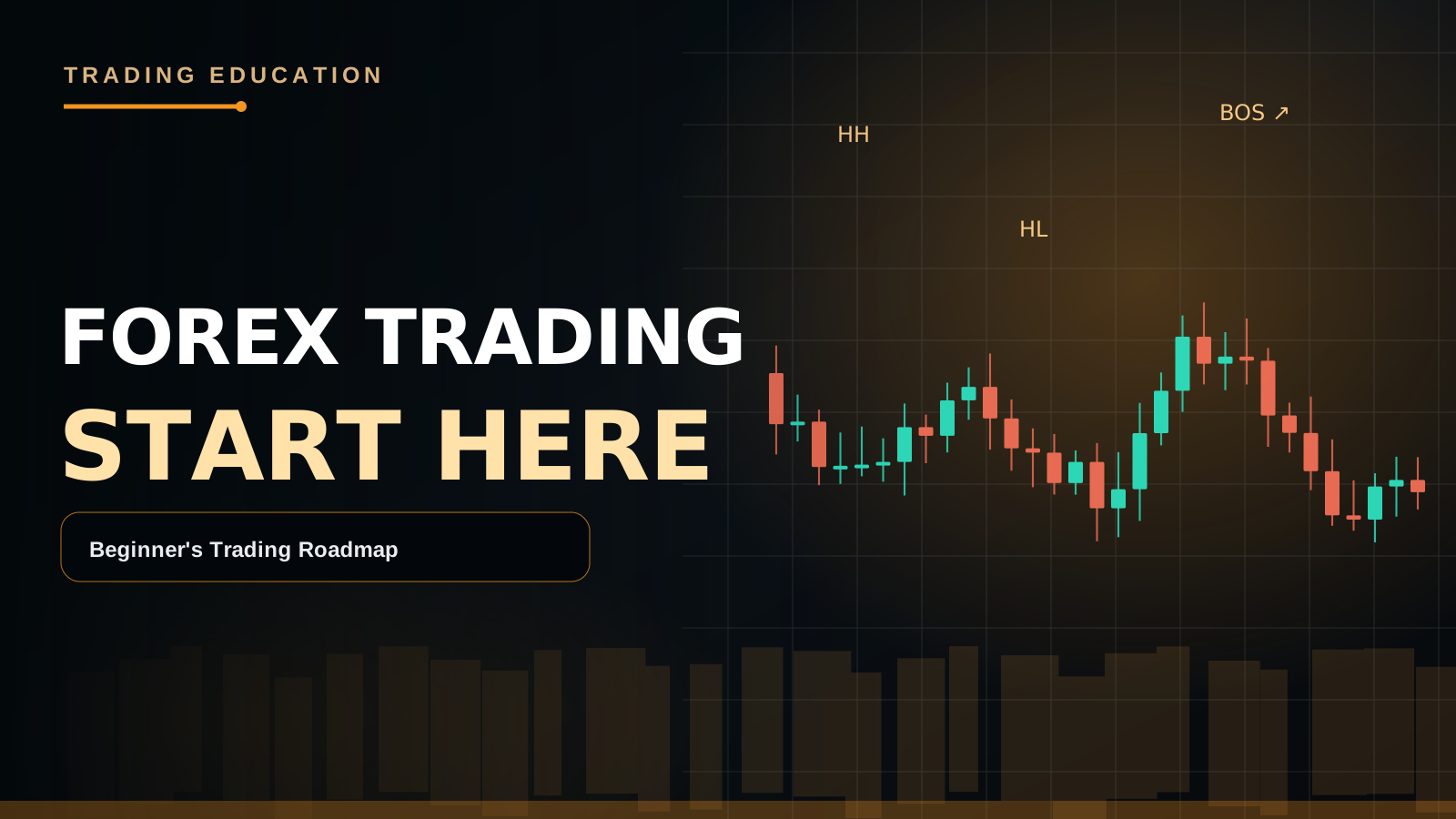
A basic playbook should name the allowed instruments, session, trend definition, support/demand marking method, entry confirmation and invalidation. For example: trade EUR/USD only when H4 is making higher highs and higher lows; identify a prior H1 demand region; wait for a completed M15 rejection and M5 structure break; calculate the lot after choosing the stop; skip if a high-impact release is imminent. This set of rules is only an illustrative framework, not proof of positive expectancy. The point is that another person could follow the same criteria and reach approximately the same setup decision.
WHY BACKTESTING MUST INCLUDE LOSERS
Suppose you examine fifty historical occurrences of your model. Record every one that met the definitions, including stop-outs, missed signals, spreads and times when the market was closed. Cherry-picking attractive historical screenshots produces unrealistic confidence. Track wins and losses as multiples of initial risk, known as R. A system with thirty wins out of fifty can still lose money if losing trades are much larger. Testing a sample is about estimating uncertainty; it cannot guarantee future behavior.
DIFFERENT ACCOUNT TYPES AND PRODUCTS
Forex exposure can be provided through various legal and financial products depending on the jurisdiction. A broker's CFD, rolling spot product and exchange-traded currency future do not necessarily have identical costs, margin requirements, consumer protections or tax treatment. Check the provider's legal documents and regulatory status. Never assume a platform that displays a familiar currency pair is regulated appropriately. Product terms matter more than colorful marketing.
COMMON PLATFORM-EXECUTION MISTAKES
Typing 1.00 rather than 0.10 lot increases exposure tenfold on the same contract. Confusing a pipette with a pip can make a planned Stop Loss ten times tighter than intended. Selecting Buy Stop when you meant Buy Limit changes the entry logic. Some instruments have suffixes or different execution rules. Before submission read the order ticket from top to bottom: correct symbol, correct direction, lot size, SL, TP, risk estimate, free margin and current spread.
FROM INFORMATION TO A TRADE PLAN
A market commentary such as "Gold could strengthen if real yields decline" is a macroeconomic scenario, not an immediate Buy instruction. Translate the idea into observable conditions: what price zone must be reached, what lower-timeframe evidence is required, where the idea fails and how much capital can be lost? If those conditions are absent, the information has not become a usable trade. When trading financial instruments with leverage, staying flat is a real decision, not failure.
A SAMPLE ONE-PAGE TRADING JOURNAL
Instrument and date: EUR/USD, hypothetical Monday. Higher-timeframe context: H4 bullish. Entry idea: H1 demand retest. Trigger: M5 bullish engulfing completed above a local swing. Planned SL: below rejection low. Target: prior H1 swing high. Planned risk: 0.5% of equity. Outcome: stopped out, -1R plus fees. Process score: rules followed. Next review: was the H1 demand already tested repeatedly, and was news about to be released? This level of review is more educational than simply writing "market manipulated me."
SELF-ASSESSMENT QUESTIONS
Can you calculate what one pip is worth for your chosen lot? Can you explain why an H1 uptrend may contain M5 bearish candles? Can you read Actual, Forecast and Previous on an economic calendar? Can you calculate loss if a stop fills slightly beyond your price? Can you state a condition under which you will not trade? If these answers are unclear, continue demo study before taking material financial risk.
KEY TAKEAWAY
Learn market mechanics, practice a repeatable setup, size positions from the stop distance and keep a journal before committing meaningful funds.
CONTINUE LEARNING WITH PIPSEPAISA
Free Forex Technical Analysis Course — Sir Sajid Khan Ghori. Want to join? Message our team on WhatsApp or visit the Courses tab at www.pipsepaisa.com to enroll.
Free Forex Fundamental Analysis Course — Sir Ghulam Abbas. Want to join? Message our team on WhatsApp or visit the Courses tab at www.pipsepaisa.com to enroll.
EDUCATIONAL RISK NOTICE
Examples are hypothetical, not live signals or personal financial advice. Leveraged trading carries substantial risk, including loss of capital.
Read in Roman Urdu
INTRODUCTION
Forex trading start karna sirf Buy ya Sell button dabana nahi hota. Pehle currency pairs, order execution, broker ke charges aur risk management samajhna zaroori hai. Beginner ka pehla goal capital protect karna aur ek disciplined process seekhna hona chahiye.
1. FOREX MARKET SAMAJHEIN
EUR/USD 1.1000 ka matlab 1 Euro ki value 1.10 US Dollar hai. Buy karne par aap Euro ki USD ke muqablay strength expect karte hain. Bid, Ask, Spread, Pip, Lot, Margin aur Leverage ka matlab clear karein. CFD aur spot-style broker products ki terms alag ho sakti hain.
2. BROKER AUR PLATFORM
Apni jurisdiction mein broker ki regulatory position check karein. Spreads, commissions, swap, withdrawal rules aur execution policy parhein. MT5 par demo account bana kar market order, pending orders, Stop Loss aur Take Profit lagana practice karein.
3. EK SIMPLE TRADING PROCESS
Shuru mein ek ya do liquid pairs select karein. H4/H1 par trend aur important zones identify karein. M15 ya M5 par planned confirmation ka wait karein. Entry se pehle invalidation level, Stop Loss aur target likhein. Sirf line touch hone se trade confirmed nahi hoti.
4. RISK KA EXAMPLE
Agar account $1,000 hai aur per-trade maximum risk 1% rakha hai, to planned loss budget $10 hai. Agar selected lot par 20-pip Stop Loss ka risk $20 ban raha hai, to lot size kam karna hoga. Actual pip value instrument aur broker contract par depend karti hai.
5. JOURNAL AUR PRACTICE
Har demo trade ka screenshot, reason, entry, SL, TP aur result note karein. Sirf win rate nahi, average win/loss aur drawdown bhi dekhein. Backtest results live market ki guarantee nahi dete.
COMMON MISTAKES
News ke waqt blind entry, loss ke baad lot double karna, SL door karna, aur 'guaranteed signals' par trust karna beginners ke common errors hain.
FAQ
Kya chhote account se seekh sakte hain? Haan, lekin chhota deposit leverage ka risk khatam nahi karta. Kya demo useful hai? Haan, mechanics ke liye; live emotions aur slippage different ho sakte hain.
BEGINNER KA PRACTICAL LEARNING ROADMAP
Forex start karne se pehle EUR/USD quote samjhein. EUR/USD 1.1000 ka matlab 1 Euro ki value 1.10 USD hai. First currency Base aur second Quote hoti hai. Bid par aam tor par Sell aur Ask par Buy execute hoti hai. Dono ka difference Spread hai. Commission, spread aur swap ko ignore kar ke strategy profitable samajhna galat ho sakta hai.
DEMO ACCOUNT PAR KYA SEEKHEIN?
MT5 install karein aur Market Watch, chart timeframes aur Symbol Specification dekhein. Demo par order open aur close karna, Stop Loss/Take Profit set karna, order modify karna aur History read karna practice karein. Buy Limit aur Buy Stop ka farq samjhein. Gold aur EUR/USD ka contract same assume na karein.
STEP-BY-STEP TRADING SETUP
H4 par overall market trend ya range identify karein. H1 par important Support/Demand Zone mark karein. Price khud zone tak aaye, uska wait karein; move chase na karein. M5 par candle ka complete close, bullish rejection ya CHoCH observe karein. Relevant swing low ke neeche invalidation define karein, aur nearest supply ko possible target ke taur par consider karein. Candle abhi ban rahi ho to confirmation complete nahi.
RISK MANAGEMENT EXAMPLE
Account $1,000 aur illustrative risk 1% ho to planned loss $10 hai. SL 20 pips ka ho to allowed pip value roughly $0.50 hogi, costs se pehle. SL 40 pips ho to pip value around $0.25 honi chahiye. Sirf badi lot use karne ke liye artificial tight Stop Loss mat rakhein. Broker Specification se exact value confirm karein.
ECONOMIC CALENDAR
CPI, NFP, FOMC aur interest-rate announcements pehle check karein. Actual released number, Forecast economists ki expectation, aur Previous old reported value hoti hai. Data surprise par Gold aur currency pairs mein dono directions ke spikes aa sakte hain. Beginner ke liye first-minute news trade karna compulsory nahi.
TRADING JOURNAL
Har trade ke screenshots, date, session, entry reason, M5 confirmation, risk, spread aur final result save karein. Losing trade aur skipped setup bhi note karein. Sirf winning screenshots se strategy profitable prove nahi hoti.
FAQ
Kya roz trade zaroori hai? Nahi. Demo profit ki live guarantee? Nahi. Har indicator use karna lazmi hai? Nahi. Pehle Pips, Lot Size, Leverage, Support/Resistance aur Risk Management samjhein.
CURRENCY PAIR AUR DIRECTION KA REAL CONCEPT
Har Forex Pair do currencies ka comparison hai. EUR/USD up jaye to Euro USD ke muqablay strong hua ya Dollar weak hua, ya dono influences combine hue. Lekin USD/JPY mein USD pehli currency hai aur EUR/USD mein second. Is liye positive USD news ka possible pair-direction effect symbol ke mutabiq interpret karna hota hai. Sirf economic calendar par green number dekh kar Buy ya Sell button press karna trading analysis nahi. Pehle Base Currency, Quote Currency aur exchange-rate movement ko clear samjhein.
TRADING STYLE APNE TIME KE MUTABIQ SELECT KAREIN
Scalping mein M1/M5 decisions fast hote hain aur spread/commission ka effect significant ho sakta hai. Swing Trading mein positions zyada der open rah sakti hain, Stop Loss wider aur overnight risk relevant ho sakta hai. Koi ek style sab ke liye best nahi. Agar aap roz sirf ek ghanta chart dekh sakte hain to aisi strategy copy na karein jisme continuous London aur New York session monitoring chahiye. Apna routine, market session, aur chart timeframe pehle set karein. Zyada screen time ka matlab zaroori nahi zyada profit.
WRITTEN TRADING PLAYBOOK BANAYEIN
Strategy sirf 'Support se Buy, Resistance se Sell' ki line nahi. Written plan mein instruments, trading hours, market trend ka rule, zone marking criteria, entry candle, Stop Loss, target aur maximum risk clearly likhein. Educational example: sirf EUR/USD monitor karna; H4 par bullish HH/HL ho; H1 Demand mark karein; M15 rejection close aur M5 structure change ka wait karein; SL meaningful swing ke beyond ho; news qareeb ho to skip. Ye rules ek hypothetical framework hain, validated winning system nahi. Good plan wo hai jise dusra trader bhi follow kar ke almost same setups identify kar sake.
BACKTESTING MEIN LOSING TRADES BHI INCLUDE HON
Maan lein aapne historical chart par 50 setups identify kiye. Sirf winners ke screenshots save karna misleading hai. Har woh setup note karein jo original conditions meet karta tha, chahe SL hit hua ho ya TP. Spread, Session, important data release aur missed entries bhi record karein. 50 mein se 30 wins ka matlab guaranteed profitable model nahi; Average Loss agar Average Win se zyada ho to net result negative ho sakta hai. Har trade ko R Multiple mein record karein taa ke different lot sizes ke results compare ho saken.
BROKER AUR PRODUCT KA DIFFERENCE
Forex ka market exposure broker CFD, rolling products ya exchange-traded Futures ke zariye offer kar sakta hai. In sab ke Margin, Commission, Financing, legal protection aur withdrawal rules different ho sakte hain. Broker ka regulatory status aapki jurisdiction mein check karein. Sirf familiar MT5 platform dekh kar samajhna ke company fully safe aur licensed hai, theek nahi. Legal terms aur withdrawal process parhein, aur guaranteed returns walay promotional claims se bachain.
MT5 ENTRY KE COMMON ERRORS
0.10 ke badlay 1.00 Lot submit ho jaye to exposure das guna ho sakti hai. Pips ko Points se confuse karne se intended 30-pip SL galti se 3 pips ban sakta hai. Buy Limit aur Buy Stop alag triggers hain. Symbol ke suffix ya Gold contract ka size bhi broker ke mutabiq different ho sakta hai. Har New Order ticket mein Symbol, Direction, Lot, SL/TP, expected risk, Free Margin aur Spread line-by-line verify karein. Galat entry avoid karna bhi trading skill hai.
NEWS KI INFORMATION SE TRADING SETUP TAK
Aapko pata chala 'Real Yields kam hon to Gold support ho sakti hai'. Ye fundamental context hai, automatic Buy Signal nahi. Isay practical plan mein convert karein: Gold kis H1 Demand par aaye? M5 candle kab confirm hogi? Agar price zone ke neeche sustain kare to idea invalid kahan hoga? Allowed loss kitni hai? Jab tak in sawalon ke jawab nahi, sirf economic opinion par order lagana sensible nahi. Market ke bahar rehna bhi ek proper decision hai.
EK COMPLETE JOURNAL ENTRY KA SAMPLE
Pair: EUR/USD. Date: hypothetical Monday. H4 trend: bullish. H1 Demand: marked. M5 confirmation: Engulfing candle closed above local swing. Stop Loss: rejection low ke beyond. TP: previous H1 High. Planned risk: Equity ka 0.5%. Result: SL hit, -1R plus costs. Process: rules correctly follow hue. Review question: kya zone pehle kai baar test ho chuki thi? Kya important news expected thi? Is tarah ki analysis 'Market ne mujhe trap kiya' kehne se zyada learning deti hai.
APNI KNOWLEDGE CHECK KAREIN
Kya aap EUR/USD mein 1 pip aur 1 pipette ka difference calculate kar sakte hain? Kya aap samjha sakte hain ke H4 bullish ho aur M5 bearish candle bhi ho sakti hai? Kya Actual, Forecast aur Previous clear hain? Kya aap planned SL se monetary loss nikal sakte hain? Kya aapke paas defined No Trade conditions hain? Agar nahi to Demo par practice continue karein. No Confirmation = No Trade.
CONCLUSION
Forex mein successful learning ka foundation market understanding, repeatable setup, controlled risk aur honest trade journal hai.
PIPSEPAISA KE FREE COURSES
Sir Sajid Khan Ghori ka Free Forex Technical Analysis Course join karna hai? PipSePaisa team ko WhatsApp par message karein ya www.pipsepaisa.com ke Courses tab se enroll karein.
Sir Ghulam Abbas ka Free Forex Fundamental Analysis Course join karna hai? WhatsApp par message karein ya Courses tab se enrollment karein.
RISK DISCLAIMER
Ye examples sirf education ke liye hain, live signals ya personal financial advice nahi. Leveraged trading mein capital lose ho sakta hai.
Educational content only. Trading involves risk. Always use independent analysis and appropriate risk management.